
19-Seat Minibus for School Groups and Youth Clubs
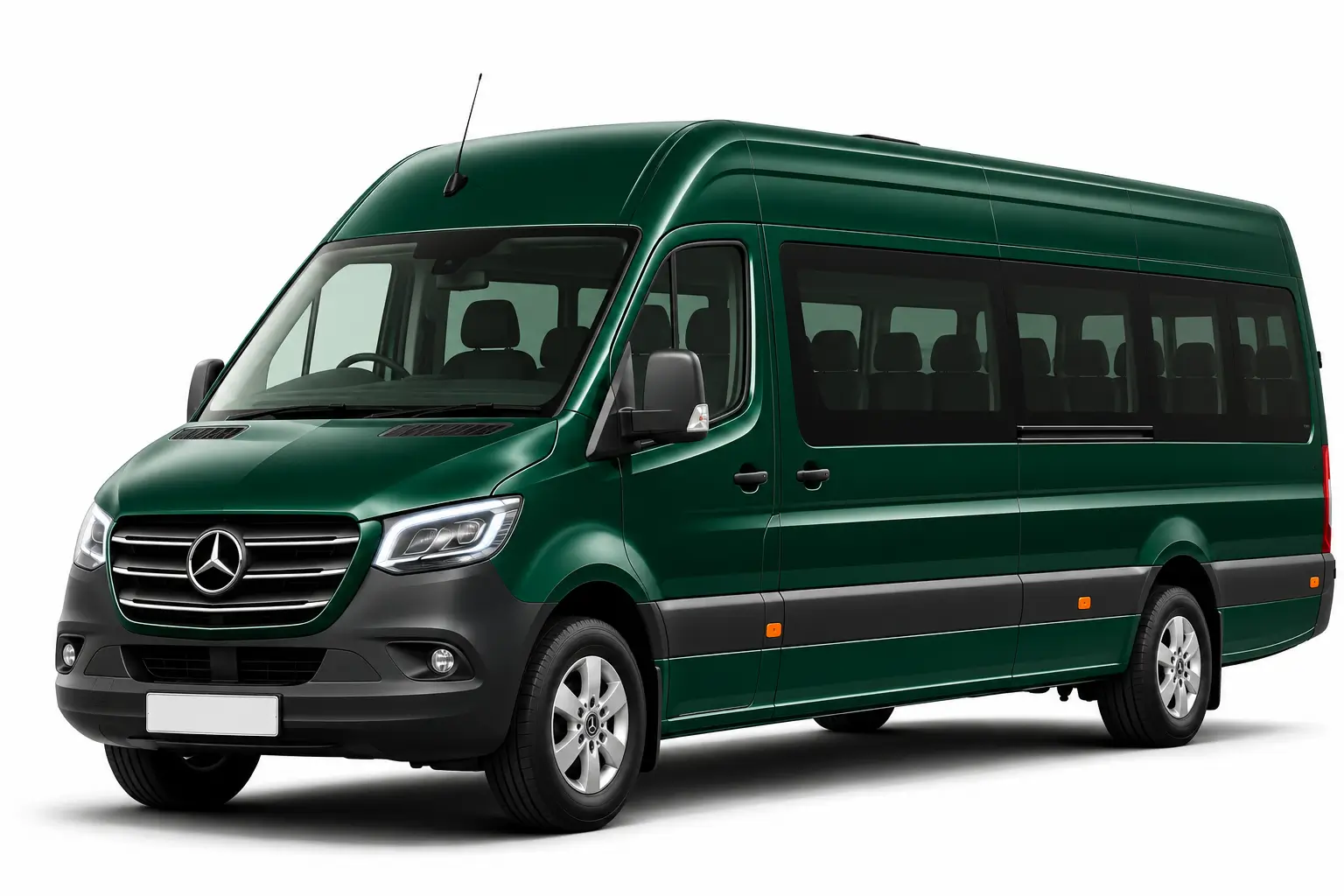
Seats for a small class, two members of staff and a helper, with the lunch boxes at the back. The 19-seater is the size teachers ask for when a coach would be half empty.
Loading the quote form…
Who usually books the 19-seat minibus?
Schools, nurseries and youth groups taking out a small class or a club. Sixteen or seventeen pupils with two or three adults is the classic load. A full primary class with staff needs the 24-seater or a 29-seat midi coach.
A minibus sized around a class
Group sizes in schools are rarely round numbers. A composite class, a support base, a P7 football team or a music group might be fifteen pupils one week and seventeen the next, with two teachers and a classroom assistant. The 19-seater gives that kind of group a seat each, plus one or two spare for a late addition or a parent helper.
It sits one step above the 18-seat minibus, adding a single seat and space for about one more large bag. The 20-seater above it adds one more seat again. Those small steps are useful when you're working to a set staff-to-pupil ratio and every seat is accounted for.
Because it carries more than sixteen passengers, the driver holds a full category D PCV licence. If your school or local authority requires extra checks for drivers working with children, tell us what you need when you enquire and we'll say what we can provide.
A museum morning, start to finish
- Head countStaff count pupils on at school, the driver counts again.
- Short runMost city museums are under half an hour away.
- Drop at the doorThe driver stops as close to the entrance as is safe.
- Back for lunchCollection timed to the school day, not the museum's.
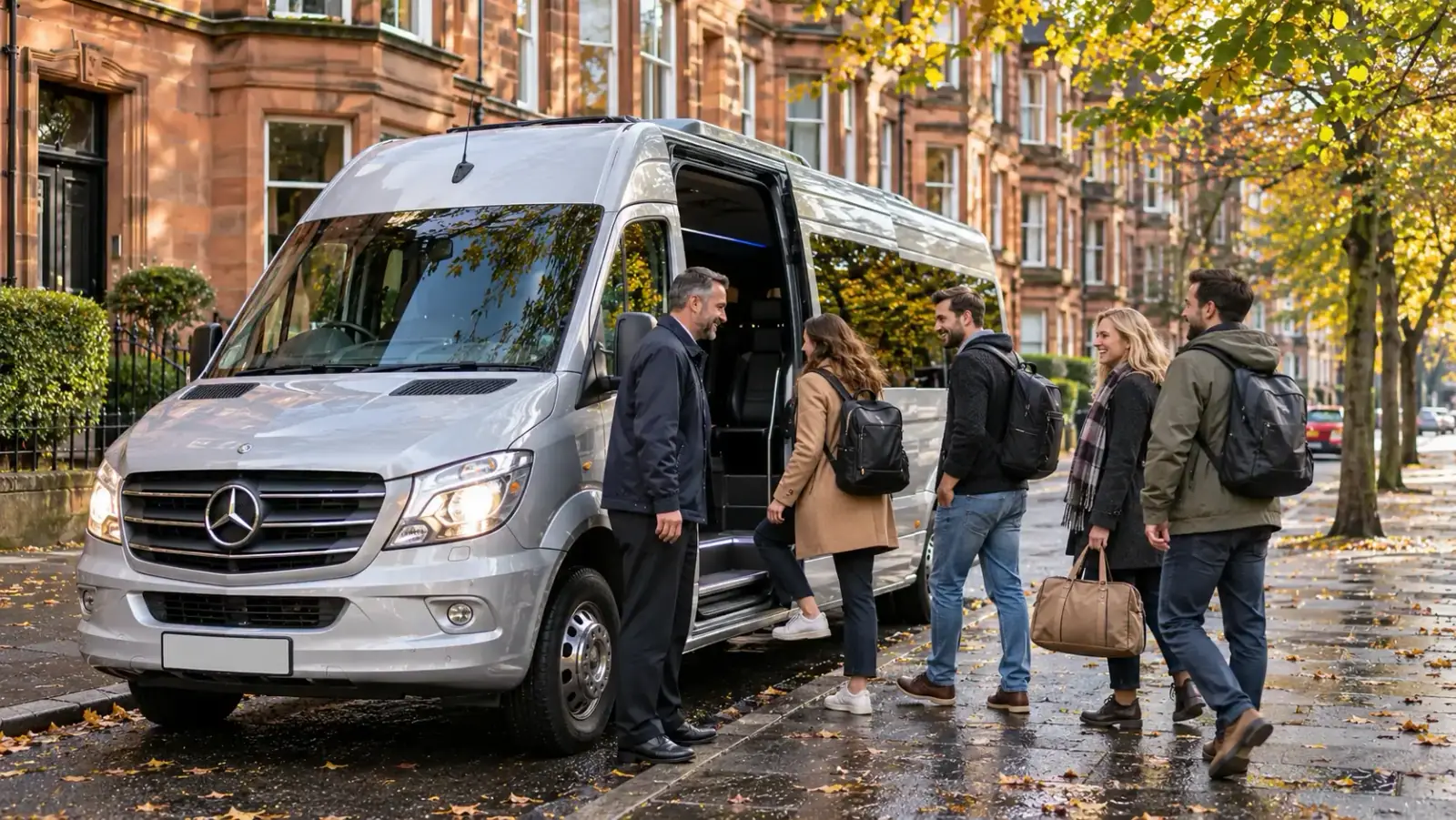
The 19-seater close up
Our 19-seaters are large minibuses with rows of forward-facing seats and luggage space at the rear. Depending on the vehicle, you'll board through a side door or a front door beside the driver. The photo shows the general type, and the exact vehicle varies.
Every seat has a belt, and pupils should wear them for the whole journey. If your school uses booster seats for younger children, tell us how many and we'll discuss whether to bring your own. Other features, such as heating zones and charging points, differ from one vehicle to another.
Ratios, seats and lunch boxes
Start with your ratio. If the trip needs one adult to every eight pupils, a group of sixteen needs two adults, which is eighteen people, with one seat to spare. That spare seat is valuable: it covers a parent helper who confirms at the last minute or a pupil who needs to sit apart.
Then the bags. With nineteen on board, the rear space takes about twelve large cases, so lunch boxes, waterproofs and a first aid kit are no trouble at all. For a residential trip with an overnight bag per pupil, sixteen small holdalls fit; nineteen full cases would be tight.
Finally, think about who sits where. Staff usually take an aisle seat in the front and back sections so they can see everyone. Pupils who get travel sick do better near the front, and anyone who needs help boarding should be closest to the door.
Our school trip planning guide has a fuller checklist, and the school trip minibus hire page explains what we ask schools to send us.
Access in the 19-seat minibus
For pupils with additional support needs, the most useful detail is which door the vehicle has. Side-door 19-seaters have one step up; front-door versions have two or three shallow steps with a rail. Either way, the seats nearest the door are best for children who need an adult's hand. A folded wheelchair fits in the rear space. If a pupil must stay in their wheelchair for the journey, this minibus isn't suitable; tell us early and we'll look for a vehicle with the right equipment for your date.
Where Glasgow classes go
Kelvingrove Art Gallery and Museum is the favourite, with its natural history galleries and the Spitfire hanging in the west court. It's about ten minutes from the city centre, and the driver can drop on the Argyle Street side of the building. The Riverside Museum, a short way along the river in the West End, is just as popular for transport topics.
The Glasgow Science Centre sits on the south bank at Pacific Quay, near Govan, and its hands-on exhibits fill a whole school day.
The Burrell Collection in Pollok Country Park is a good choice for art and history topics, with the park itself offering space to run around at lunchtime. It's on the edge of Pollok, about fifteen minutes from the centre.
The People's Palace on Glasgow Green covers the city's social history, and the Botanic Gardens suit science and plant topics in spring and early summer.
What schools usually check before booking
Most schools and councils have their own rules for trips, and we're used to working within them. The usual questions are about the driver, the vehicle and the timings. Ask us for the details your risk assessment needs, such as the driver's licence category and the vehicle type, and we'll provide what we hold.
Timings deserve care. Museums and attractions often have set slots for school groups, and the bell at the end of the day doesn't move. We plan the outward trip to arrive a few minutes before your slot and the return to reach school before home time. If a parent pickup is happening at the school gate, tell us so the minibus can stop where it won't block anyone.
On the day, the teacher in charge keeps the register. The driver counts heads too, but the final word on whether everyone is on board belongs to the school.
For trips that need payment through a council purchase order or a school business manager, tell us when you enquire. We can send the booking details in whatever form your office needs, and we'll keep the trip reference on every message so it's easy to match up later.
If anything changes, such as a pupil absent on the morning or a member of staff swapped, a quick message before departure is all we need.
Youth clubs, sports teams and weekends
Outside school hours, the 19-seater is popular with youth organisations. Scout and Guide groups heading to a campsite, a church youth group off to an activity centre, or a dance school travelling to a competition all tend to fit this size. Kit, costumes and sleeping bags go at the back.
Junior sports teams use it too, particularly where a squad travels with two coaches and a couple of parents. See sports team travel for fixtures and tournaments further afield.
For older students, such as a sixth-year trip or a college course outing, the university and student travel page covers similar trips with fewer supervision requirements.
Whatever the group, the driver needs to know the final head count before setting off, and a named adult to speak to on the day. With children on board, it's also worth agreeing what happens if someone is ill: whether the driver should take them back to school or wait with the group. Write it into the plan, and make sure every adult on the trip knows it before the minibus leaves the school gate. A simple plan agreed in advance saves a lot of phone calls from a museum car park.
19-seat minibus questions
How many pupils and staff fit in the 19-seater?
Nineteen people in total, plus the driver. Sixteen pupils with three adults is a common arrangement.
Do pupils have their own seat belts?
Yes. Every seat has a belt, and pupils should wear it whenever the minibus is moving.
Can you provide booster seats?
Not always. Tell us how many younger pupils are travelling and we'll say whether to bring the school's own.
Will the driver wait at the museum?
If the booking covers the whole visit, yes. For a long visit, the driver may return at a set time instead.
How long does it take to get to Kelvingrove from the city centre?
About ten minutes in normal traffic, longer at school-run times.
Is the 19-seater suitable for an overnight trip?
Yes, for groups with modest bags. Sixteen holdalls fit at the back; nineteen large cases would not.
What licence does the driver of a 19-seater hold?
A full category D PCV licence, needed for any minibus with more than sixteen passenger seats.
What should a school send to get a quote?
The date, the school's address, the destination, arrival and return times, and the exact numbers of pupils and adults. Mention any additional support needs too.