
53-Seat Coach for Big Groups Leaving Glasgow
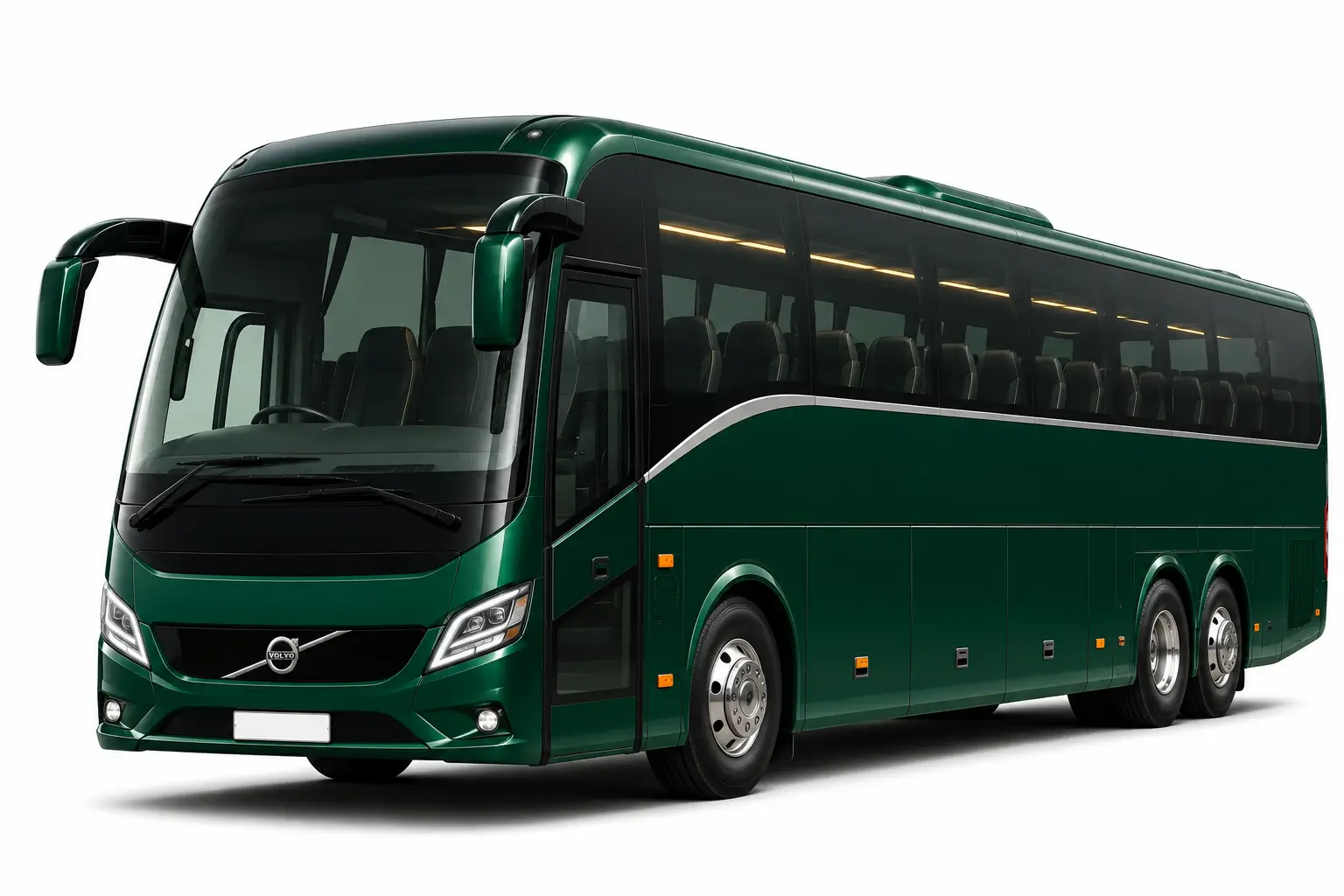
The full-size coach most people picture: fifty-three seats, a deep luggage hold and a driver who does this every week. For a supporters' branch, a whole year group or a works conference, it puts everyone in one place.
Loading the quote form…
Who is the 53-seat coach for?
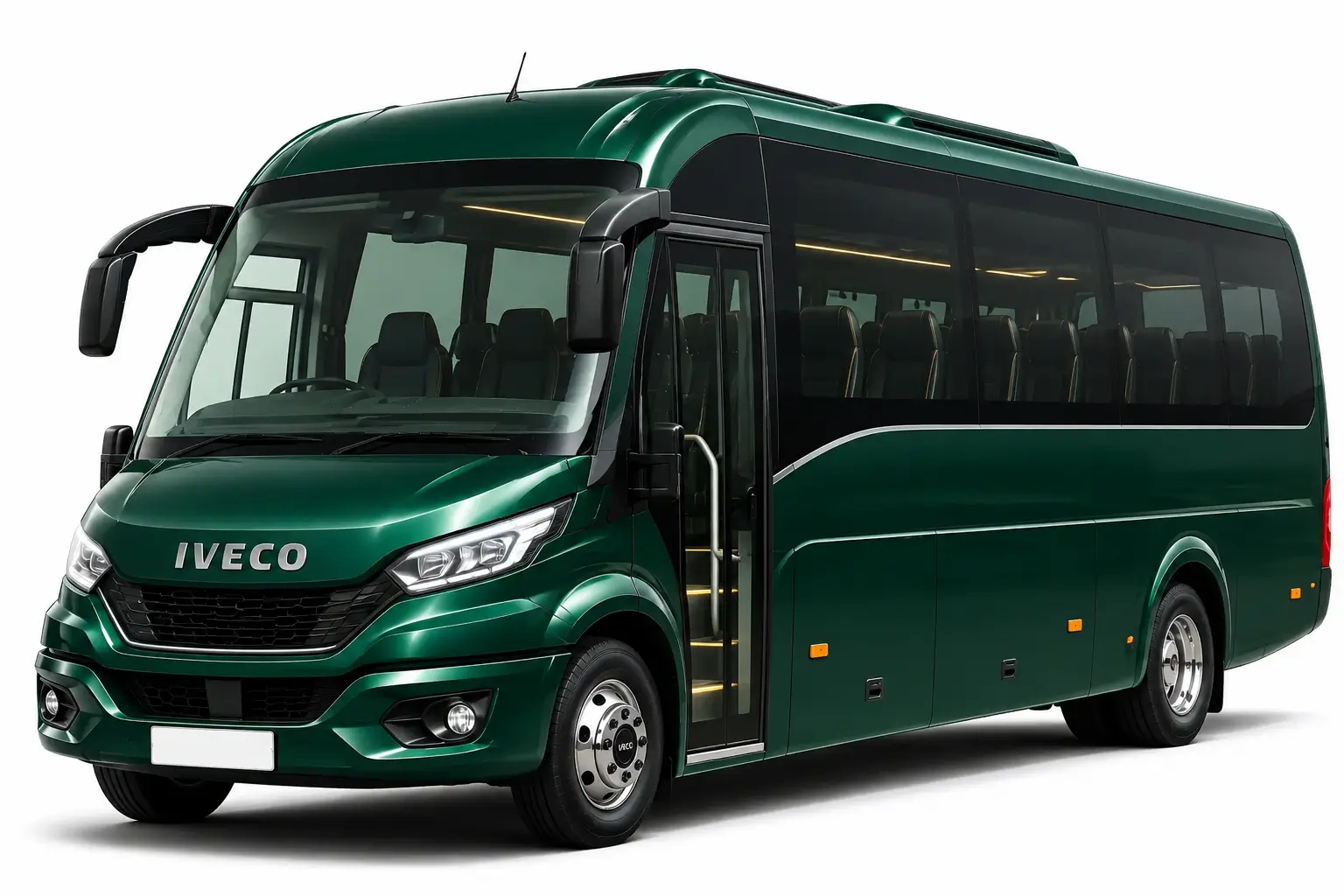
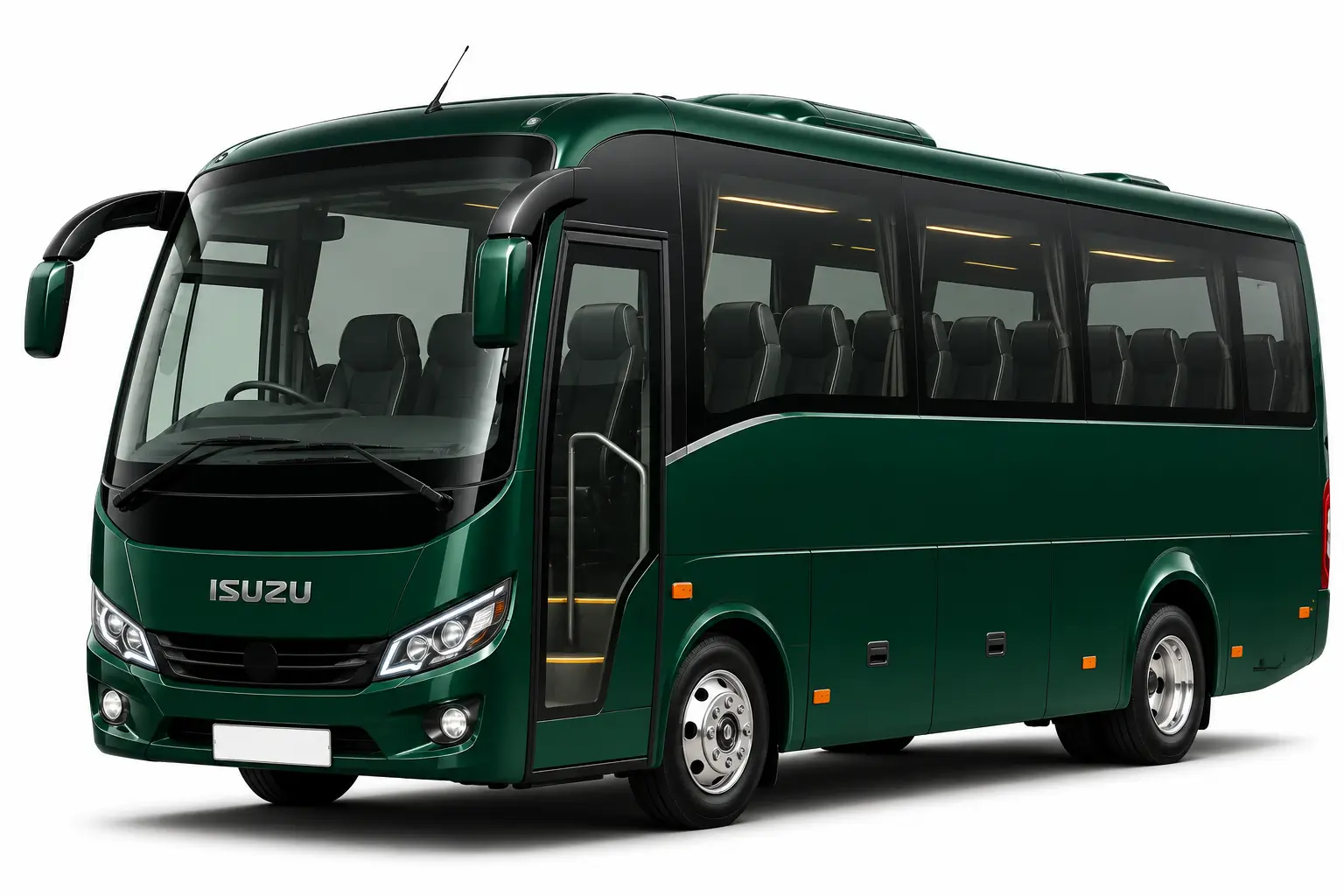
Groups of roughly thirty to fifty-three who want to travel together with luggage: supporters' clubs, school year groups, conference delegates and touring parties. Smaller groups suit the 29-seat midi coach, and bigger ones the 72-seat double-decker.
The workhorse of group travel
If you ask someone to imagine a coach, the 53-seater is probably what they see. It's a single-deck, full-length vehicle with high seats, big windows and lockers along the underside for luggage. It's the standard size for a reason: it carries a large group in comfort, handles motorways and long journeys well, and fits into most coach parks at stadiums, attractions and hotels.
The step up from the midi coach is about more than seats. A full-size coach has a deeper hold, which matters for tours and residential trips where everyone brings a suitcase, and it rides more smoothly over long distances. For a five-hour run south or a week touring the Highlands, that comfort adds up.
It's also simpler to manage than two smaller vehicles. One coach means one pickup time, one driver to talk to and one head count. For a supporters' branch or a school year group, keeping everybody together removes most of the day's stress. Nobody is left at a services car park wondering which vehicle they came on, and the organiser can count heads in a single sweep down the aisle.
Inside a 53-seater
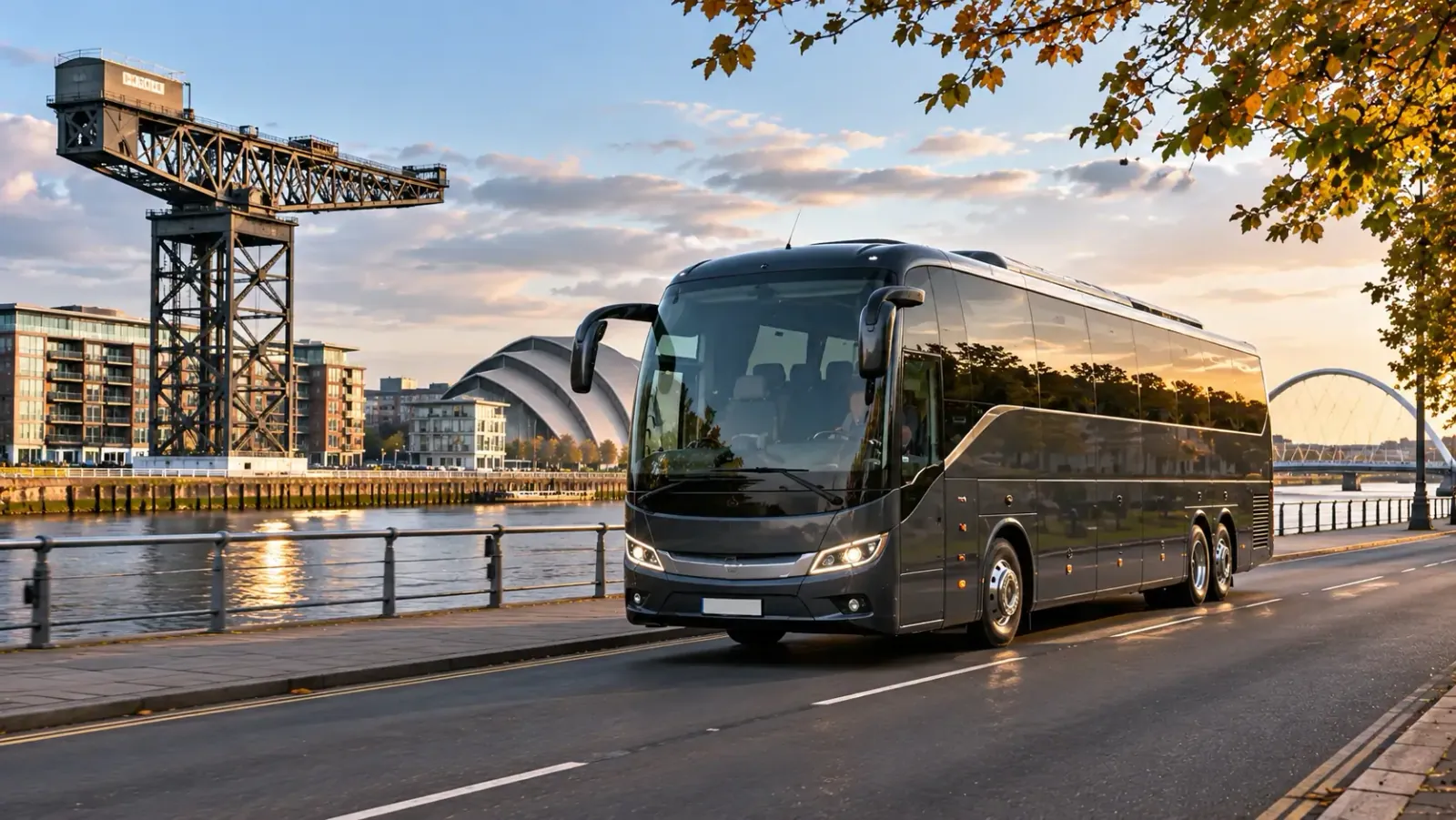
Passengers board through the front door beside the driver, up a short flight of steps with handrails. Seats are arranged in pairs either side of a central aisle, each with a belt, and the windows run the full length of the cabin. Luggage goes into the lockers underneath, which the driver opens from the side.
The specification varies between coaches: some have reclining seats, tables, charging points or a toilet, others don't. Treat the photo as an example of the class of vehicle; the coach allocated to you may differ in model and colour. If a feature is essential for your trip, such as a toilet on a long journey, tell us when you book so we can confirm it before the day.
Big days the 53-seater is built for
Supporters' trips
Home and away
A whole branch to Hampden or an away ground in England, with the drop-off and pickup agreed around the crowds.
School year groups
Days out and residentials
Fifty pupils and their staff on a single coach, with every bag in the hold. See school trips.
Works and conferences
Shuttles and celebrations
Delegates between hotels and the SEC, or a company night out. See corporate travel.
Long journeys and drivers' hours
Coach drivers work under strict rules on driving time and rest. On a long trip, that shapes the timetable: a run of several hours includes a break of at least forty-five minutes, and a very long day calls for a second driver or a night in a hotel along the way. Those breaks go into the plan from the start, so the group knows when and where they'll stop.
For supporters' clubs heading to fixtures in England, that usually means a comfort stop somewhere along the M74 or M6, timed so the group arrives with time to spare before kick-off. On the way home, the same rules apply, which is why the return time needs agreeing in advance rather than decided on the day.
For tours and longer trips, the driver's accommodation is part of the plan as well. Our nationwide travel page covers how we organise overnight stays and multi-day itineraries.
Where a full-size coach can stop
A 53-seater is long and needs space to stop, load and turn. Good pickup points include school drives and playgrounds with permission, church and supermarket car parks, hotel forecourts and wide main roads with a lay-by or bus-free stretch.
Tenement streets with parked cars on both sides are rarely suitable. If your group lives on narrow streets, the driver will suggest a meeting point at the nearest main road, often only a short walk away.
For events, the coach usually uses a set-down area provided by the venue or the local authority. At stadiums such as Celtic Park and the larger concert venues, coach parking is often separate from cars, and the driver confirms the exact location on the day.
If you're unsure whether a pickup point works, send us the address. We'll tell you whether a full-size coach can reach it or whether a short walk to a better spot makes sense.
Festivals, conferences and big celebrations
Large events are where a single coach earns its keep. For a summer festival such as TRNSMT on Glasgow Green, a coach from a town outside the city lets a big group of friends arrive together and leave together at the end of a long day, without anyone hunting for a train or a taxi after the headliner. Our festival transport page covers how we time drop-offs and returns around the gates.
Conferences and exhibitions at the SEC often need shuttles between delegates' hotels and the venue each morning and evening. A 53-seater can run a loop through the city centre hotels on a fixed timetable, which is simpler for the organiser than dozens of taxis and easier for delegates to follow.
Big celebrations use it too. A wedding with a large guest list, a milestone birthday with relatives from across Scotland, or a company's annual dinner can all move guests from one place to another in a single trip. For weddings, the coach often takes guests from the ceremony to the reception while the couple have their photographs taken, then returns at the end of the night.
Whatever the event, the key detail is the finish time. Large crowds take a while to clear, so we agree a pickup point a little away from the main exit and allow for the time it takes everyone to find their way back to the coach.
Access in the 53-seat coach
The front steps on a full-size coach are steeper than on a minibus, which can be difficult for passengers with limited mobility. There are rails on both sides and the driver can help, and the front seats are the closest to the door. Wheelchairs and frames travel in the hold when folded. Some coaches have a lift for a passenger who stays in their wheelchair, but not every vehicle does, so tell us at the start and we'll confirm whether one is available for your date.
Running a full coach smoothly
With fifty passengers, boarding and unloading take time. Ask everyone to be at the pickup fifteen minutes early, with luggage labelled and ready to go in the hold. Name one organiser as the driver's contact for the day, and keep a passenger list so the head count at each stop is quick.
For school groups, staff run their own registers at every stop, and the driver checks the numbers too. For adult groups, a simple rule that the coach leaves on time, with a phone number to call if someone is running late, saves a lot of waiting around.
If your group is between twenty-nine and fifty-three, the 53-seater is usually more practical than two smaller vehicles. If it's over fifty-three, the 72-seat double-decker carries everyone at once, or two coaches can split the group by pickup area.
 24-seat minibus
 29-seat midi coach
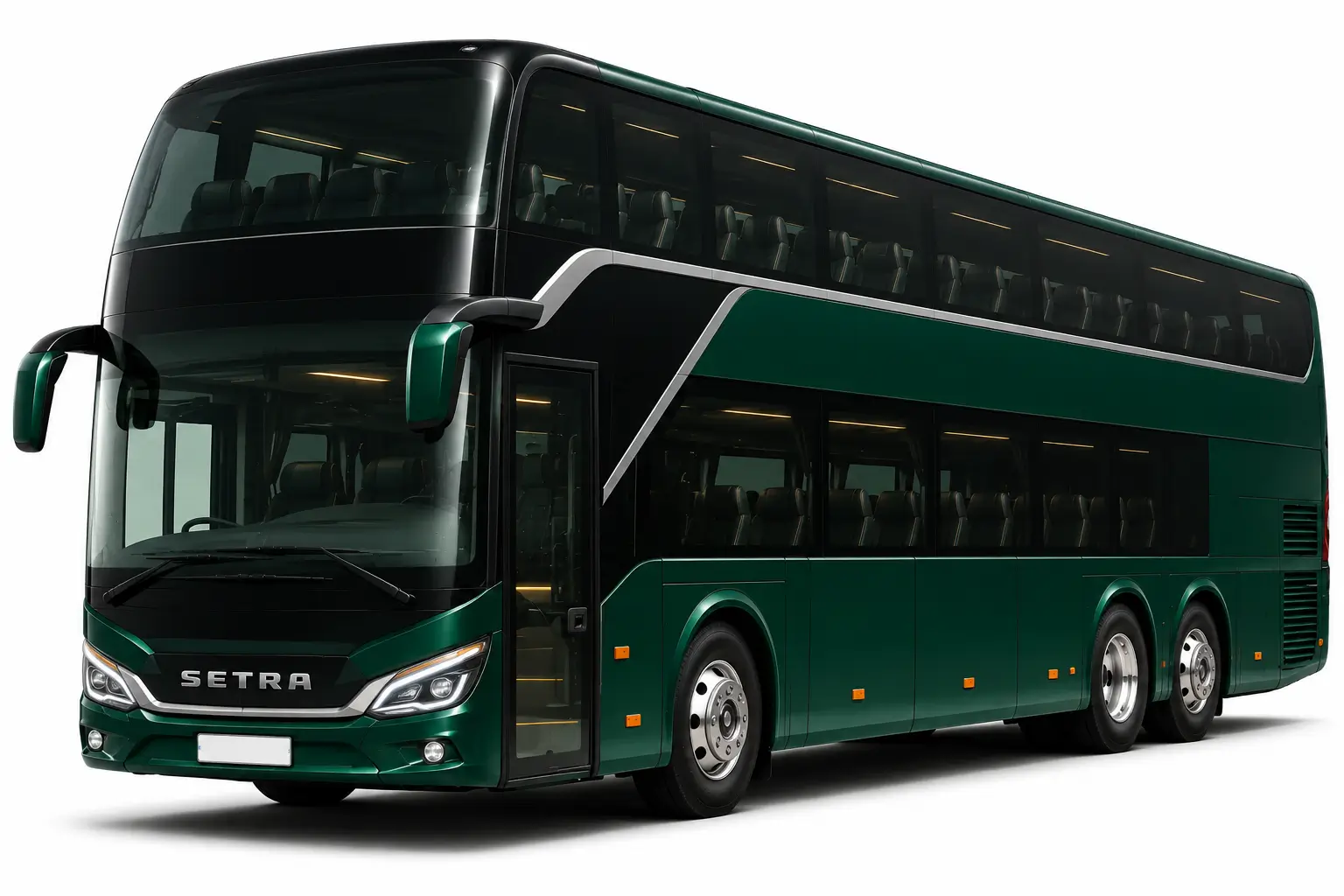 72-seat coach
53-seat coach questions
How many people fit on a 53-seat coach?
Fifty-three passengers, plus the driver, each with a belted seat.
Does the coach have a toilet?
Some do and some don't. If you need one for a long journey, tell us when you book and we'll confirm it.
How much luggage fits in the hold?
Usually one suitcase per passenger plus hand luggage, stored in lockers underneath the cabin.
Do you run supporters' coaches to grounds in England?
Yes. We plan the route, the comfort stops and the drivers' hours around the kick-off and the journey home.
Is the 53-seater good for school trips?
Yes, for a whole year group or several classes travelling together, with every bag in the hold.
Can a full-size coach collect from a residential street?
Often not, especially on tenement streets. The driver will suggest a nearby main road or car park instead.
Where does the coach wait at a stadium?
Usually in the coach parking area the venue provides, which the driver confirms on the day.
What licence does the driver hold?
A category D licence, the professional licence for buses and coaches.