
14-Seat Minibus for Glasgow Office Teams
Big enough for a whole department, small enough to pull up outside a restaurant. The 14-seater is the vehicle Glasgow offices book for lunches, away days and conference runs.
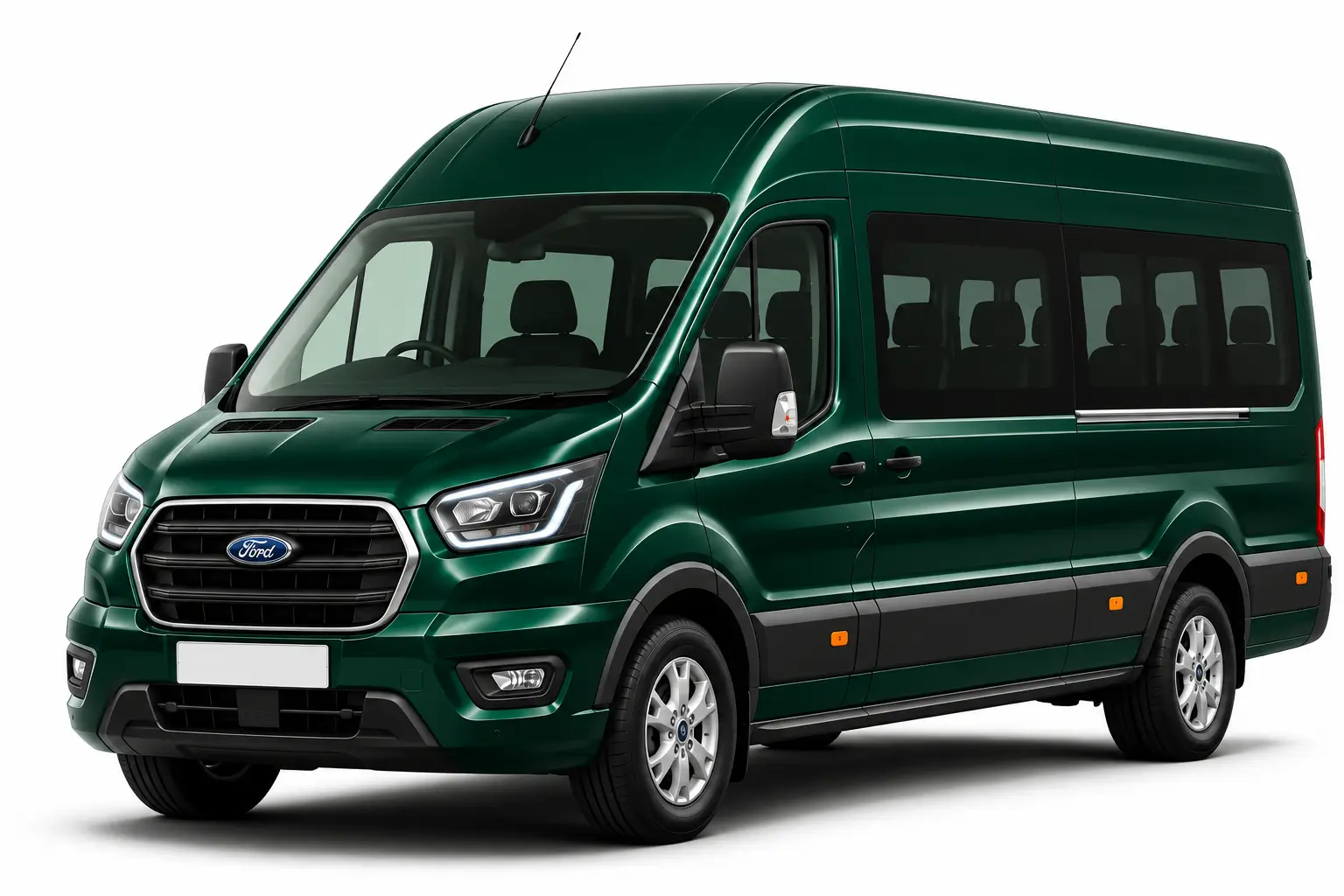
Loading the quote form…
Who is the 14-seat minibus for?
Groups of thirteen or fourteen, and smaller groups with a lot of kit. Office teams, conference delegates and golfers playing as two four-balls book it most. It holds about nine large cases with every seat taken, one more than the 12-seater.
The department-sized minibus
Plenty of Glasgow teams sit at somewhere between ten and fourteen people. That's a sales floor, a project team, a practice of solicitors or a small charity's whole staff. The 14-seater exists for exactly that number: it takes everyone, with a little room for coats and laptop bags, and there's no awkward split between two vehicles.
Against the 12-seater below it, you gain two seats and roughly one case of luggage space. Against the 16-seat minibus above, you give up two seats and about a case, and the vehicle is slightly shorter. For many groups the choice comes down to whether the head count is truly fixed. If it's fourteen and could become fifteen, book the sixteen.
Like every minibus with nine to sixteen passenger seats, the 14-seater is driven by someone with a D1 PCV licence or the full category D. The driver's job is to keep to time, help with bags and be nearby when you're ready to leave.
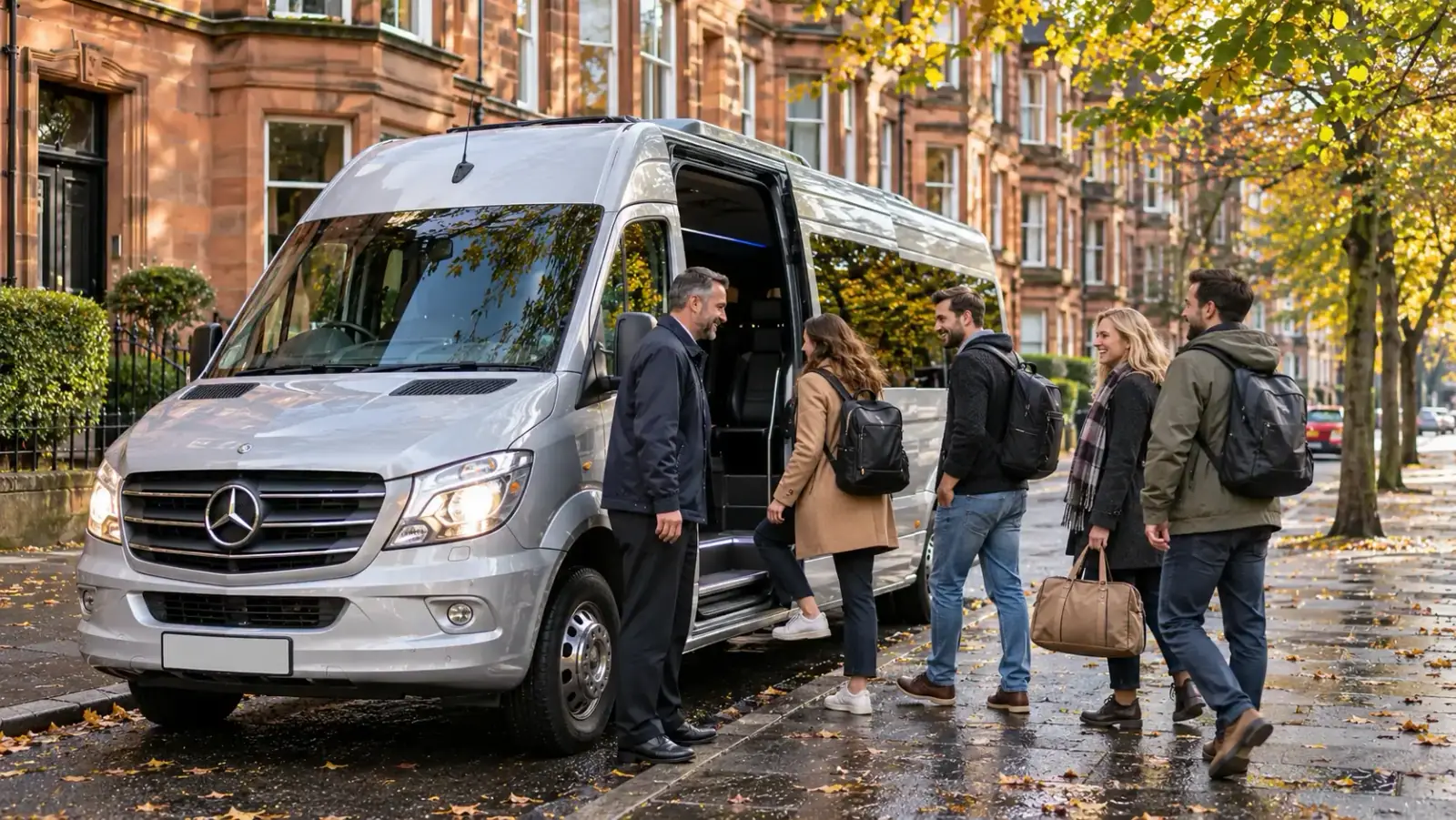
A closer look
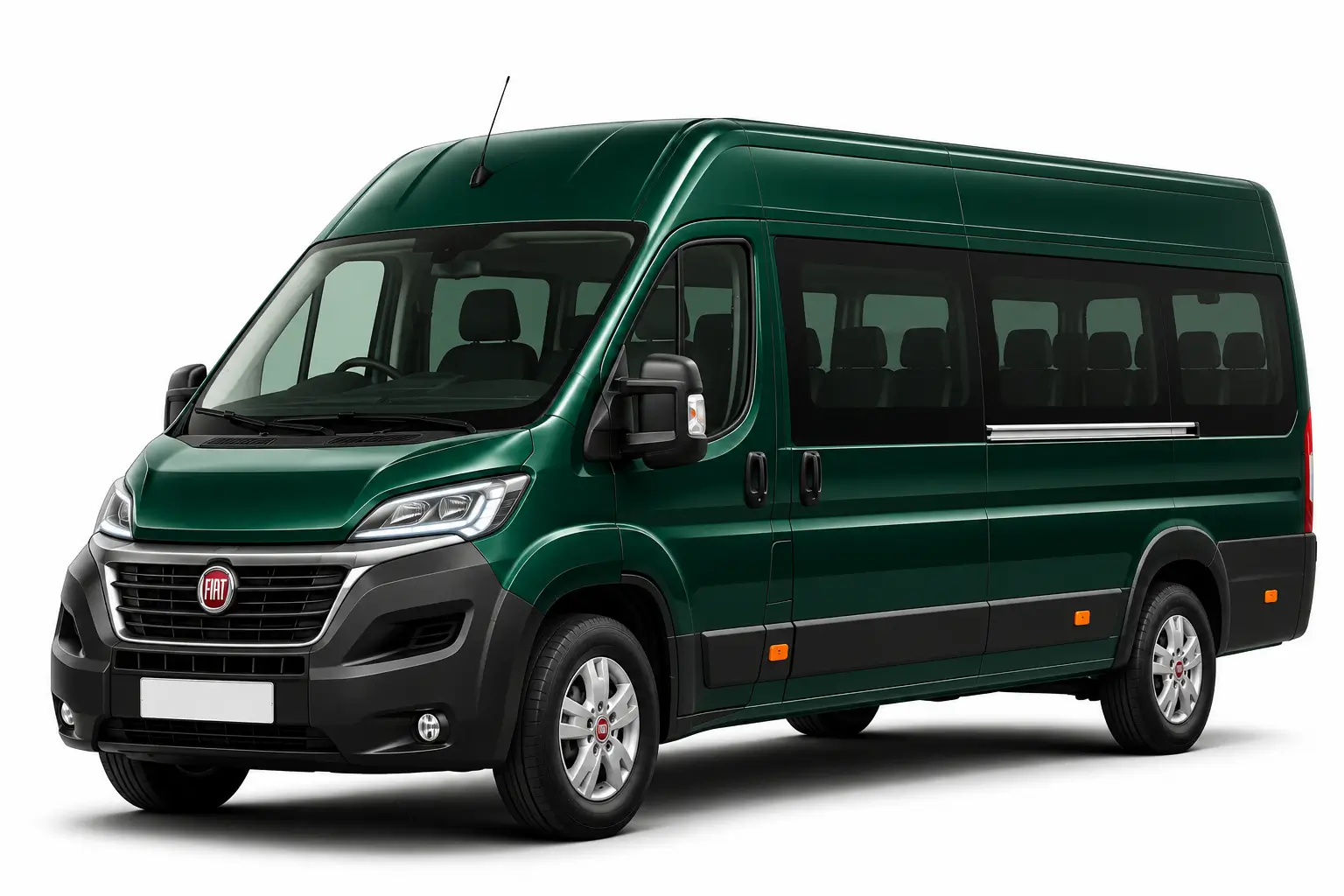
Our 14-seaters are high-roof minibuses on a long chassis. Rows of forward-facing seats run back from the side door, and the luggage space sits behind the last row. The exact model depends on the date and the fleet, so the image shows the type rather than a specific registration.
Inside, every seat has a belt. Things like charging points, reading lights and air vents vary between vehicles. If your team plans to work on laptops during a long run, tell us and we'll check what the allocated minibus has.
Some layouts include a passenger seat beside the driver. It's handy for the person running the itinerary, who can keep an eye on timings and chat to the driver about the next stop.
Compare it with its neighbours
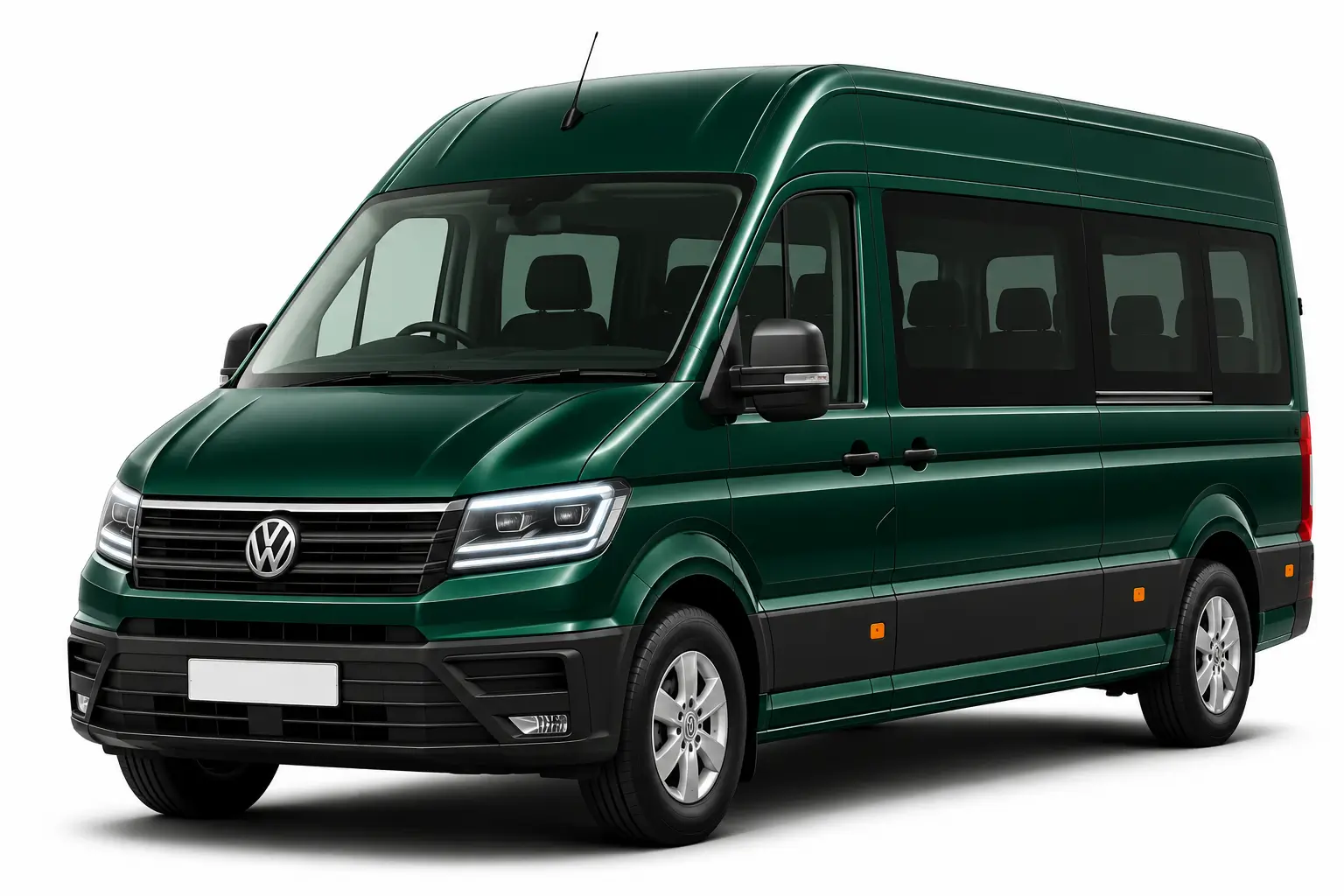
Switch either side to see how the seats and luggage space change.
- Seats
- 12
- Cases (all seats taken)
- about 8
- Type
- minibus
- Good for
- A five-a-side squad with subs and kit
- Seats
- 14
- Cases (all seats taken)
- about 9
- Type
- minibus
- Good for
- An office team going to a West End lunch
Lunches, away days and conference runs
The most common office booking is a lunch or a celebration. A team leaves an office on West George Street, the driver heads out along Sauchiehall Street towards the West End, and everyone is dropped near Byres Road in about fifteen minutes. The driver parks up and returns when the bill is paid.
Away days go further. Loch Lomond Shores at Balloch is around forty minutes away, Stirling about the same. Our corporate travel page covers regular and account bookings.
Conferences are the other big use. Delegates staying in city-centre hotels need moving to the SEC and back each day, and the 14-seater can run a loop of hotels before the morning session. For larger events, see our page on the SEC Armadillo.
December brings the work night out. A meal, a show or a trip round the Christmas markets, then everyone home in one vehicle.
Fitting the bags in
With fourteen people on board, plan for about nine large cases. That's around two cases for every three people, which suits a short business trip with wheeled cabin bags but not a family holiday with big hard-shell suitcases.
Golf groups get on especially well with this size. Eight golfers playing as two four-balls use eight seats, leaving six seats spare and the whole rear space for clubs. Eight full golf bags and eight small overnight cases fit without anyone hugging a putter. That's why the 14-seater is the size we suggest for a golf weekend of eight.
For conference groups, exhibition boxes and pop-up stands are the wild card. Measure them before you book and tell us. A banner stand in a bag is fine; a pallet of brochures is not.
Airport runs follow the same maths. Twelve people with a case each fit well; fourteen with large cases each don't. For a big team flying to a conference abroad, count the cases first.
Access in the 14-seat minibus
There's a step up through the sliding side door and usually a handrail on the frame. On layouts with a front passenger seat, that seat has its own door and needs no walk down the aisle, which suits someone who finds stooping difficult. Seats near the side door are the next easiest. A folded wheelchair or rollator rides in the rear space, taking two or three cases' worth of room. We can't carry anyone seated in a wheelchair in this vehicle; tell us at the start and we'll check the options for your date.
Keeping a team day on schedule
Office trips usually have more moving parts than they first appear to. People finish meetings at different times, someone needs to leave early for a train, and the restaurant booking can't move. The simplest fix is a short itinerary: the pickup point, each stop with a rough time, and the final drop-off.
The driver works from that, but adapts on the day. If lunch runs over, that's fine. If half the team wants to go back to the office and the other half wants a drink, the driver can usually run both, as long as the booking covers the time.
For delegates and visitors, it helps to put one person in charge of the list. The driver will count heads before leaving each stop, but a named organiser keeps things moving. If you're planning something more formal, such as client transfers, our executive travel page might suit better.
Student groups use the 14-seater too, especially sports clubs and society outings. See university and student travel for the trips we plan with them.
Stopping in the city centre
The grid of streets around Blythswood Square and St Vincent Street has plenty of loading bays, bus lanes and one-way sections. A minibus can't stop in a bus lane or a bus stop, so we'll agree a meeting point with you before the day. Office car parks, hotel forecourts and quieter side streets all work. Our city centre page describes some of the easier stopping points.
The 14-seater is too tall for underground parking, so a pickup from an office basement isn't possible. The street door is the usual answer. If you're unsure about size in general, the guide to choosing a minibus size walks through the decision.
Regular bookings for busy offices
Some firms use the 14-seater every month: a monthly team lunch, quarterly client visits or a recurring shuttle for staff between two sites. If that sounds like you, tell us the pattern and we'll keep the details on file, so each booking takes a quick message rather than a fresh enquiry.
It also helps to know who can approve changes on the day. A named contact with a mobile number keeps things moving when a meeting overruns.
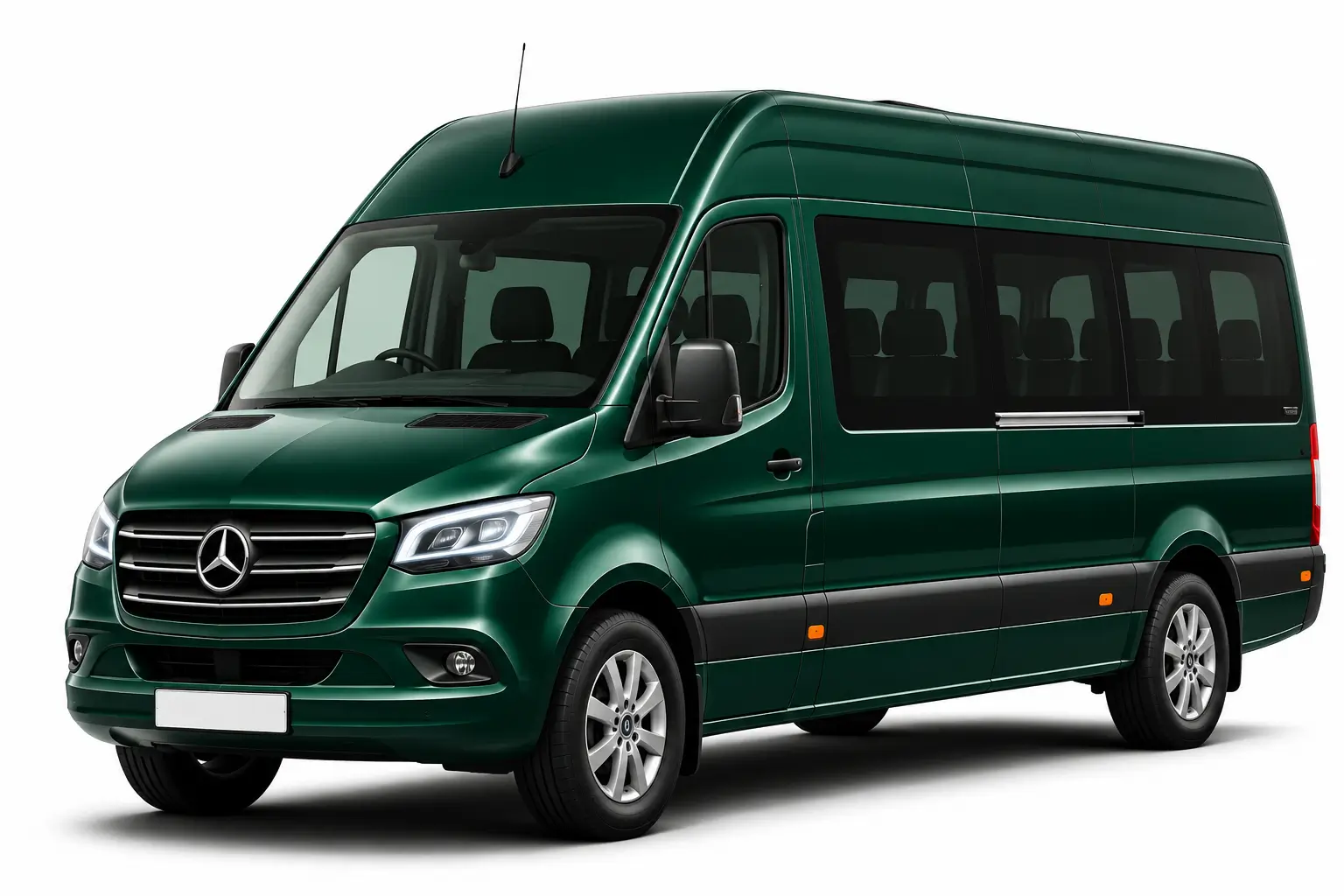 16-seat minibus
 18-seat minibus
14-seat minibus questions
How many passengers does the 14-seater take?
Fourteen, plus the driver. Some layouts put one of those seats beside the driver.
How many cases fit with fourteen people?
About nine large cases. With fewer passengers, spare seats can hold extra bags.
Is the 14-seater good for two golf four-balls?
Yes. Eight golfers use eight seats, leaving the spare seats and the rear space for clubs and overnight bags.
Can the minibus shuttle delegates between hotels and the SEC?
Yes. Send the hotels, the session times and the number of delegates, and we'll plan a loop that gets everyone there before the start.
Can the driver wait while we have lunch?
Yes. The driver parks nearby and comes back when you call. Waiting time is part of the booking.
What licence does the driver need?
A PCV licence in category D1 or D, because the minibus has more than eight passenger seats.
Should we book the 14 or the 16?
If fourteen is a firm number with light bags, the 14-seater fits. If people might be added or the bags are bulky, the 16-seater gives you a margin.
How do I get a price for an office trip?
Send the date, stops, times and head count. We'll quote for the hours and mileage your day needs.