
20-Seat Minibus for Glasgow Weddings and Family Occasions
Twenty guests in their good clothes, from the hotel to the church and on to the reception, with nobody hunting for a taxi in heels. The 20-seater is built for the days when everyone needs to arrive together.
Loading the quote form…
The 20-seater at a glance
The figures that matter when you're moving a wedding party or a big family.
- Passenger seats
- 20, plus the driver
- Luggage, every seat taken
- About 12 medium cases
- Driver's licence
- PCV category D
- Most booked for
- Wedding guests and family occasions
- Typical runs a day
- Two or three short shuttles
- Features
- Vary by vehicle, so ask if one matters
One vehicle for the whole guest list
Most wedding parties and family gatherings land somewhere between sixteen and twenty people once you count partners, grandparents and the friends who always come along. That's the range where cars stop making sense and a coach feels too big. The 20-seater carries the lot in one go, so the group arrives together, leaves together and doesn't spend the day comparing taxi apps.
It's one seat up from the 19-seat minibus, which is shaped around school classes, and two below the 22-seater. That single extra seat matters more than it sounds. Guest lists change in the final week, and a spare seat is the difference between one vehicle and two. It also gives a bridesmaid somewhere to put the flowers, or a grandparent room to stretch a stiff knee on the way home.
With more than sixteen passengers on board, the driver holds a full category D PCV licence. That's a legal requirement for this size, and it means the person behind the wheel drives larger vehicles for a living.
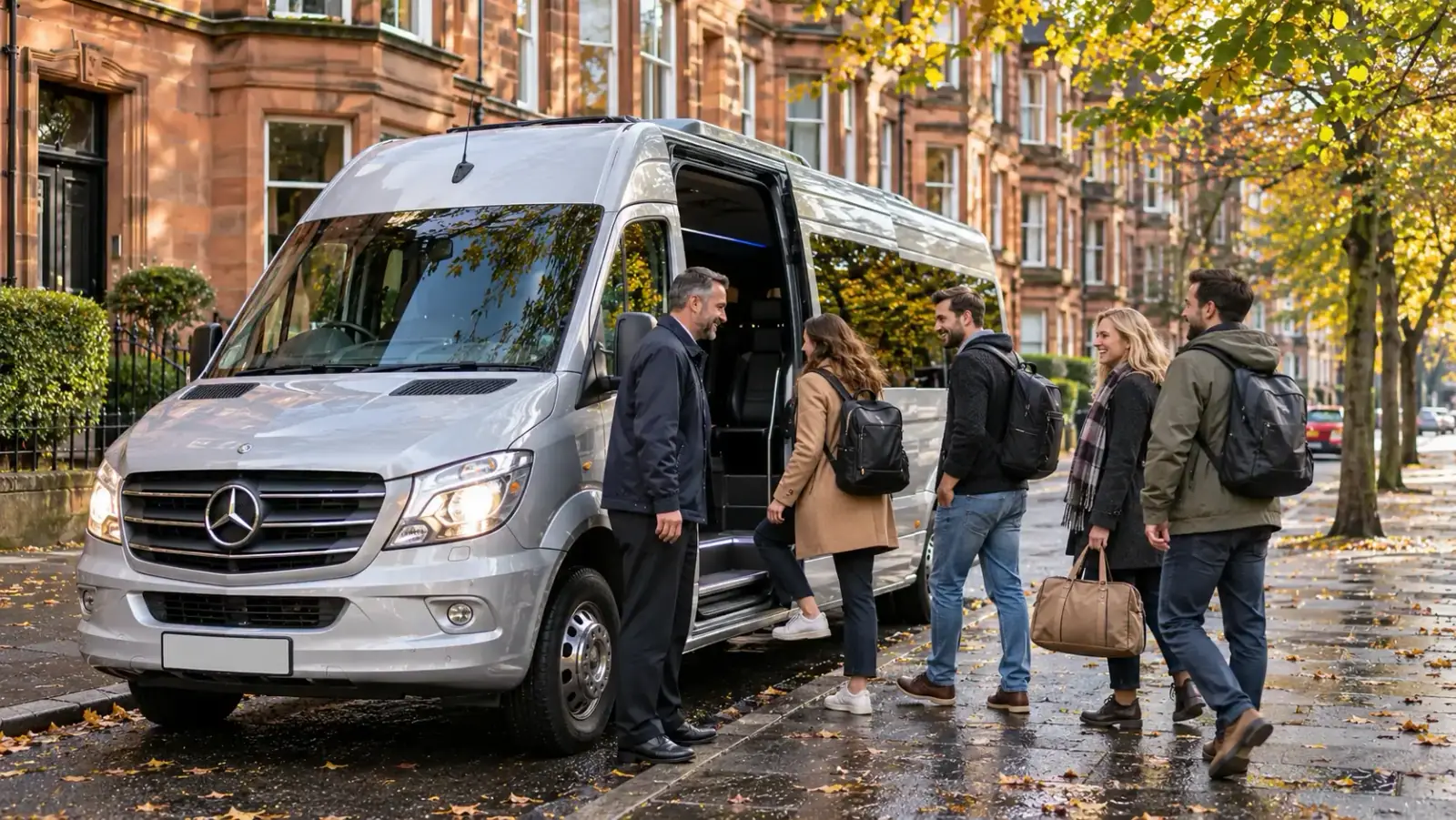
Inside the 20-seater
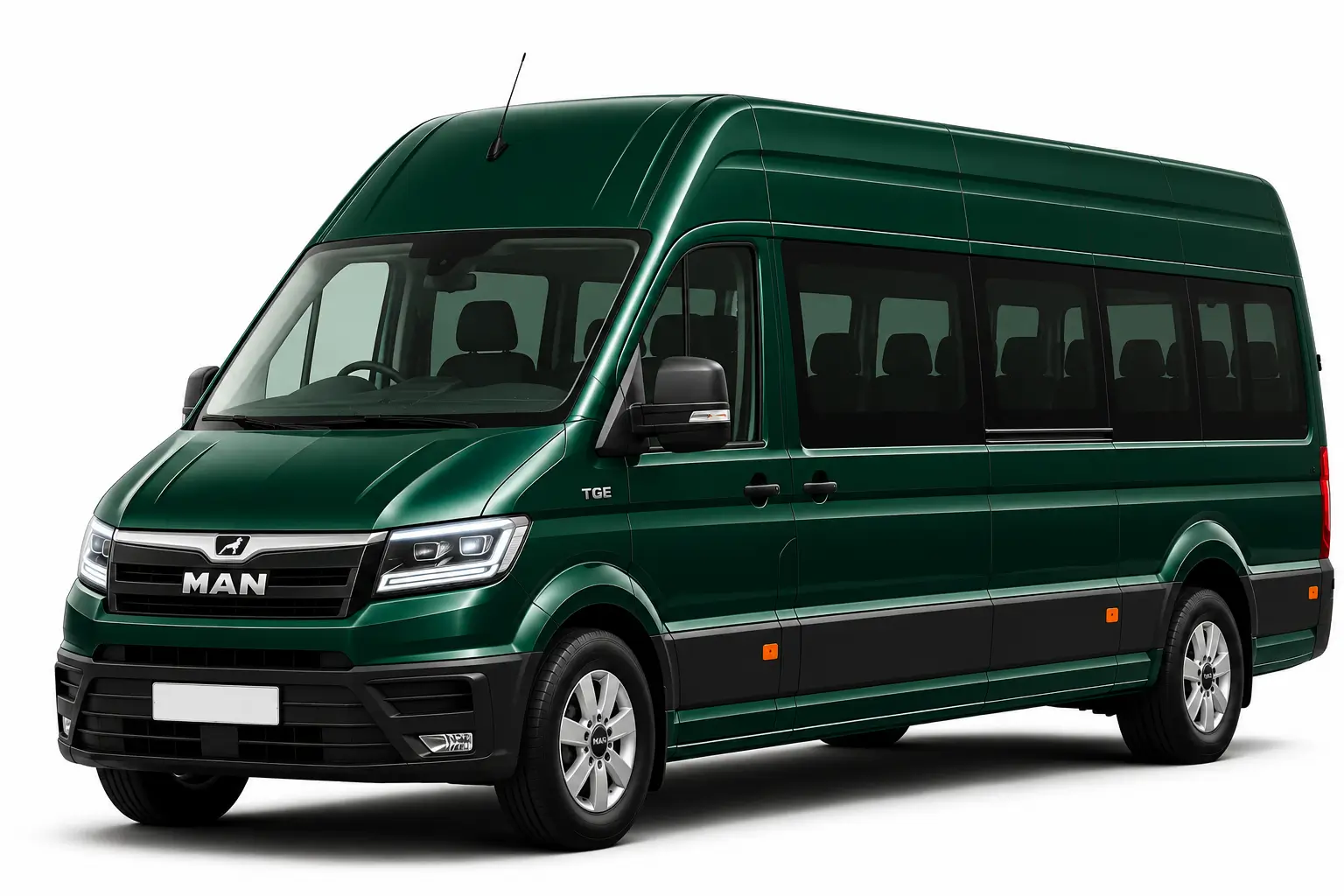
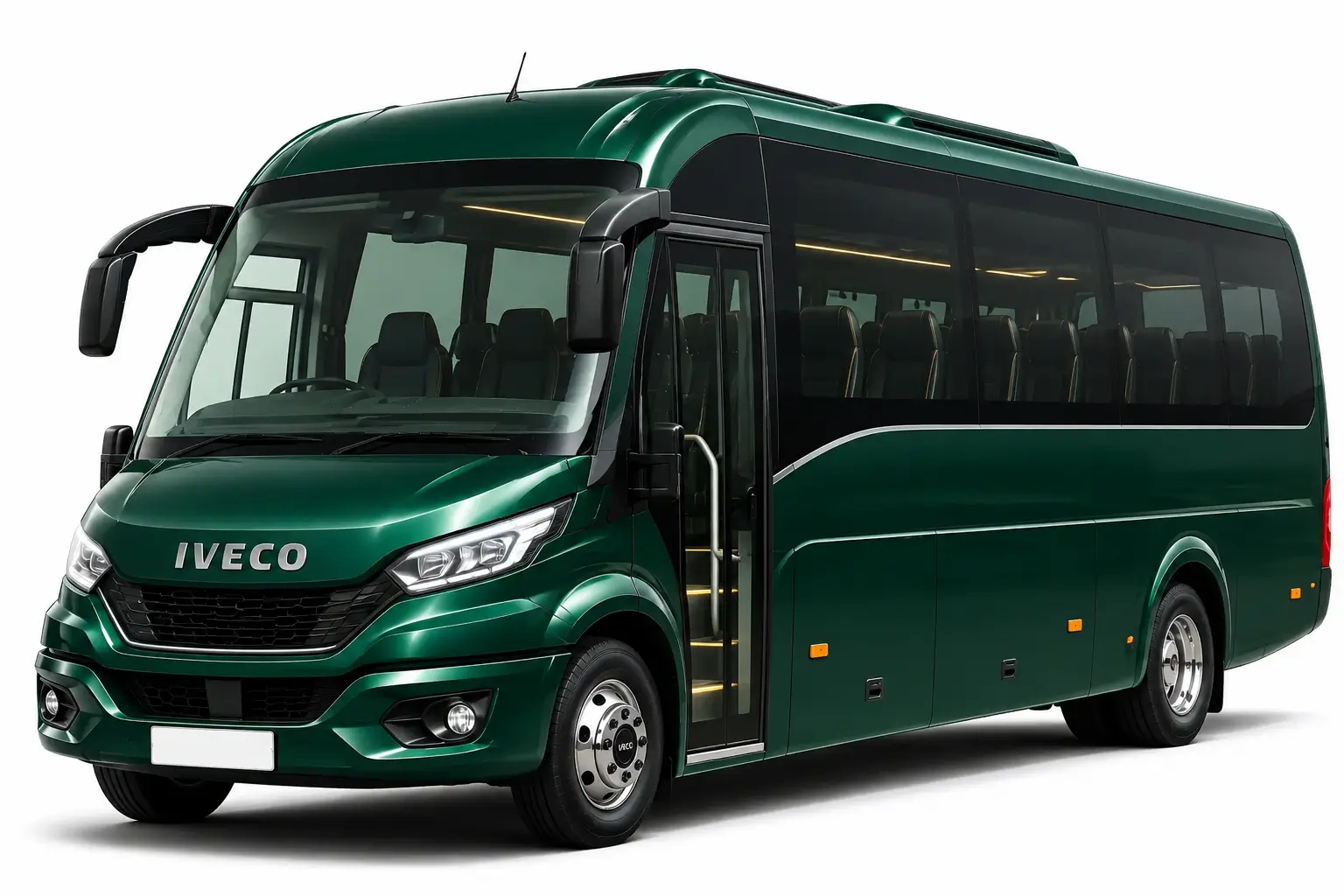
The 20-seater is a long, high-roof minibus with forward-facing seats in rows and space for bags behind the last row. The roof height means most adults can stand up straight while they find a seat, which helps when people are boarding in formal clothes or carrying a bouquet.
Every seat has a belt. Heating, charging points and the layout of the seats differ between vehicles of the same size, so if something is essential, such as a particular door or extra legroom for an older guest, mention it when you book and we'll confirm what the vehicle on your date offers.
The picture shows the general type of vehicle rather than the exact one you'll get.
A typical wedding day in shuttles
An example for twenty guests staying at a city-centre hotel, with a church ceremony and a country-house reception. Your timings will follow your own day.
| Time | What happens | Why it matters |
|---|---|---|
| 1.15pm | Guests collected from the hotel | Twenty minutes before you need to leave, so nobody runs for the door. |
| 1.40pm | Arrive at the church | Well before the bride, never after. |
| 3.30pm | On to the reception venue | One run while the couple have their photographs taken. |
| 11.30pm | First return to the hotel | For families with children and older guests. |
| 12.45am | Last return | For everyone still dancing. |
How wedding shuttles work
The simplest wedding booking is a loop: hotel to ceremony, ceremony to reception, and a return to the hotel once the band packs up. The 20-seater handles all three with the same driver, who learns the faces by the second run and knows where everyone needs to be.
Many couples split the evening return into two. Families with young children and older relatives usually want to leave after the first dance, while the rest stay until the last song. Booking an early and a late run keeps both groups happy and saves anyone being stranded at a venue outside the city.
The bridal party is often a separate booking. A smaller vehicle, such as an 8-seat MPV, can take the bride's family from home to the ceremony at a different time from the guests, so the two timings never clash.
For a full guide to planning transport around a Glasgow wedding, including timings for photographs and receptions, read our wedding transport guide, or see the wedding transport service page.
Three 20-seater bookings
Country-house reception
Twenty guests staying in the city centre, a ceremony at a city church and a reception at Mar Hall near Bishopton.
We'd suggest: The 20-seater on a three-run loop, with an early and a late return.
Christening and lunch
Three generations of a family from Newton Mearns, a church service and a long lunch in town.
We'd suggest: One 20-seater, collecting from four addresses.
Wedding and party venues we travel to
In the city, the grandest ceremonies happen at Glasgow City Chambers on George Square and at the Trades Hall in the Merchant City. Both sit in busy streets where a vehicle can't wait outside, so the driver sets the guests down nearby and returns at the agreed time.
Òran Mór, the former parish church where Byres Road meets Great Western Road in the West End, hosts weddings and parties all year, and evening returns from there are among the most common late runs we plan.
Outside the city, Mar Hall near Bishopton is about twenty to twenty-five minutes from the centre along the M8, and Crossbasket Castle near High Blantyre is a similar distance to the south-east. Venues on the banks of Loch Lomond are nearer forty minutes.
For receptions further out, the trip back at midnight is the one to plan carefully. A booked return means nobody has to arrange a lift home from a country road in the dark.
Christenings and anniversary lunches follow a gentler rhythm. The service is usually late morning, the meal runs into the afternoon, and the family wants to be home before evening. One driver can cover the whole day, waiting nearby during the meal and taking everyone home in the order that suits the oldest guests first. If the lunch is at a restaurant in town, the driver drops at the door and collects from the same spot.
Access in the 20-seat minibus
Weddings often bring older relatives and guests with walking sticks. The 20-seater usually has a step up with a handrail, and the driver can help with bags and give a steadying hand. Seat anyone who finds steps difficult nearest the door. A folded wheelchair travels in the rear space. If a guest needs to stay in their wheelchair for the journey, tell us first, because that needs a vehicle with a lift, and we'll check what's free for your date.
Overnight bags, gifts and table decorations
On a wedding weekend, guests often travel with overnight bags as well as handbags and suit carriers. With every seat taken, the rear space holds around twelve medium cases, so a group of twenty with one small bag each is comfortable. If most guests bring a full suitcase, either send the bags ahead with the first run or step up to a 24-seat minibus and use the spare seats.
Wedding gifts, table plans and boxes of favours can travel on the first run to the venue, which keeps them out of the way of guests later. Tell the driver what's on board so it comes off at the right stop.
For a bigger guest list, the next steps up are the 22 and 24-seat minibuses, then a 29-seat midi coach with a separate luggage hold. Over about thirty guests, a coach is usually simpler than two minibuses.
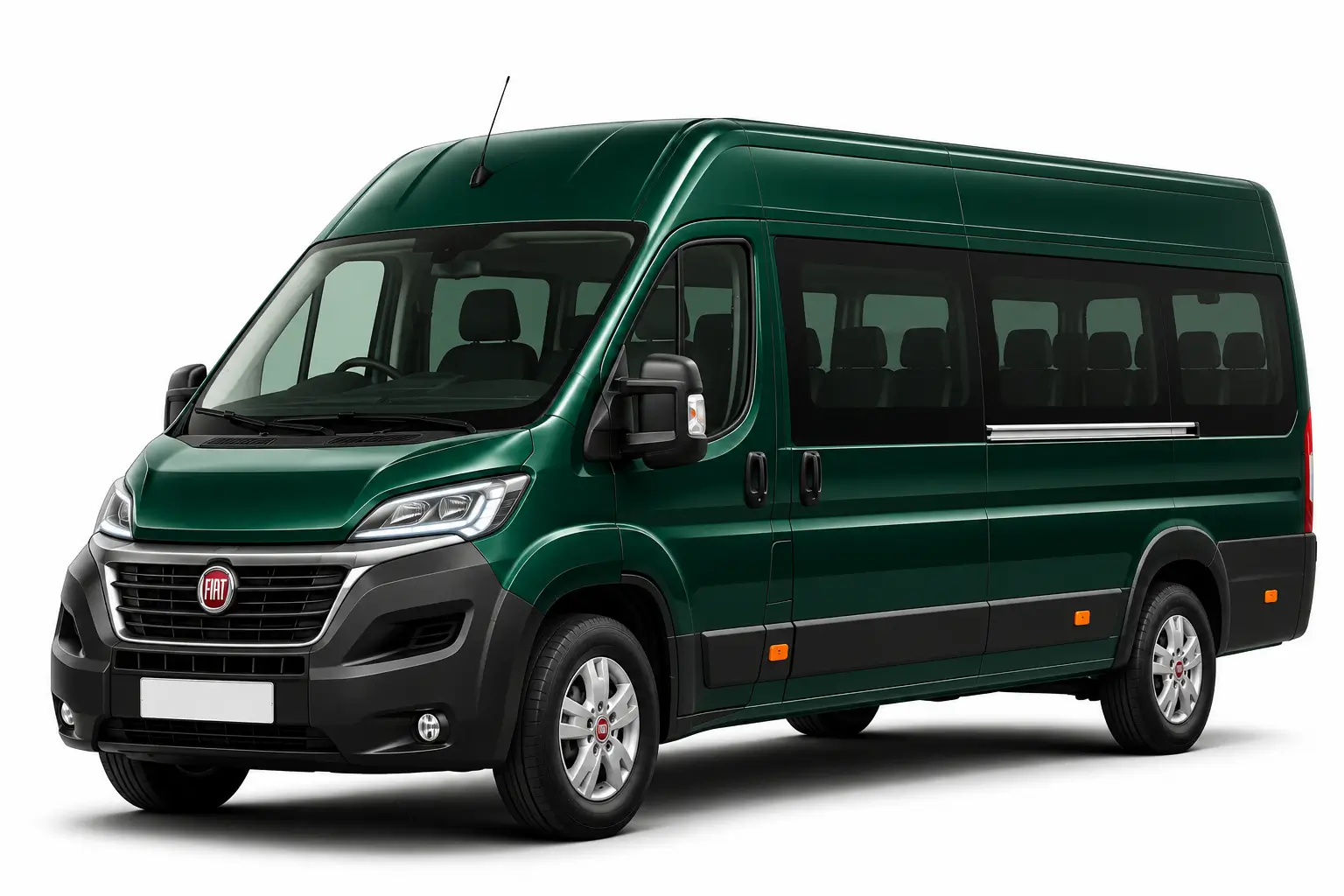 18-seat minibus
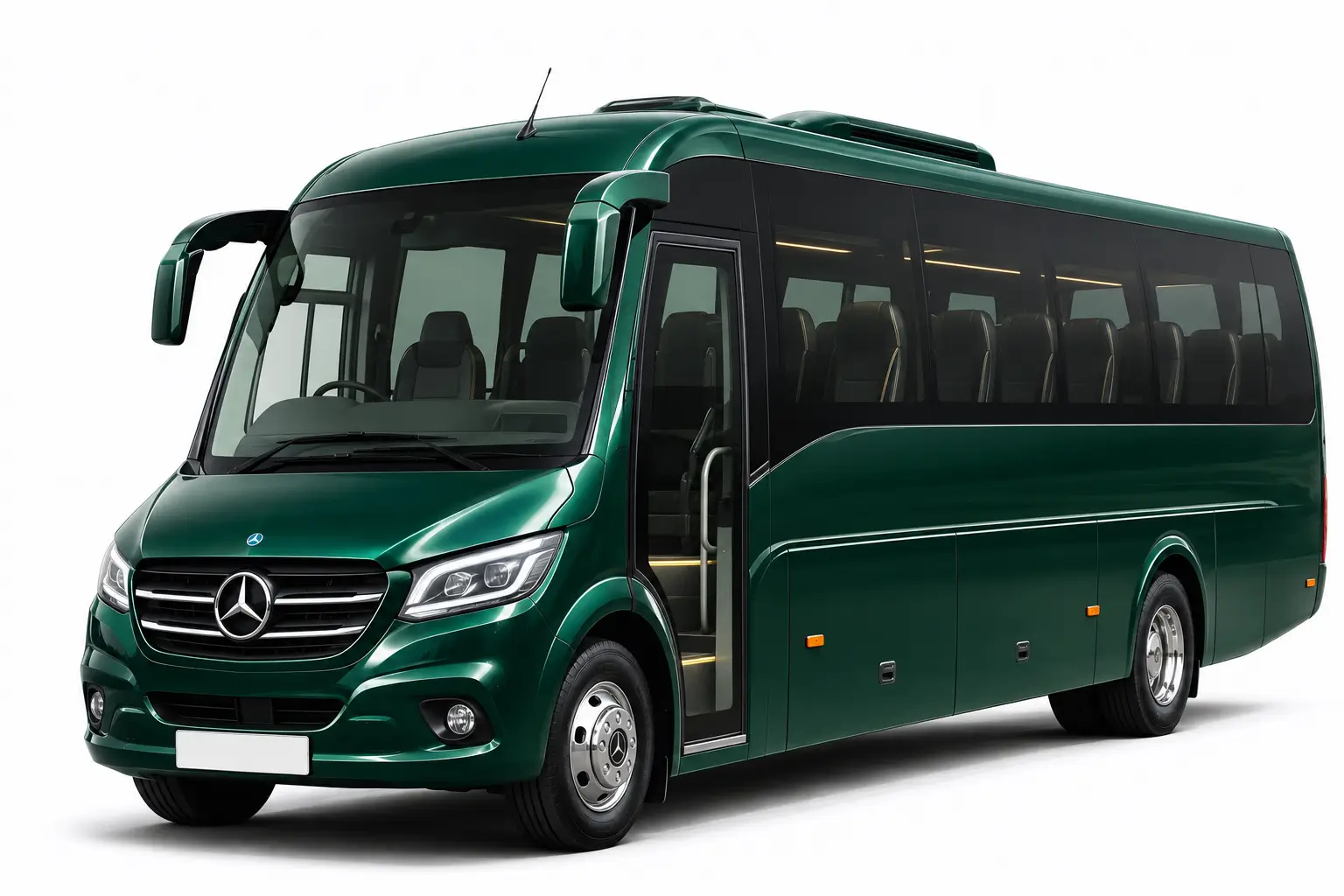 22-seat minibus
 24-seat minibus
20-seat minibus questions
- How many guests fit in the 20-seater?Twenty passengers, plus the driver, each with their own seat and belt.
- Can the same minibus do several runs on a wedding day?Yes. Most wedding bookings are a loop of hotel, ceremony, reception and back, with the same driver all day.
- Can we have an early and a late return from the reception?Yes, and many couples do. Families with children leave first, and the rest come back on a second run.
- What licence does the driver hold?A full category D PCV licence, which is required for minibuses carrying more than sixteen passengers.
- How much luggage fits with every seat taken?About twelve medium cases at the back. For a full suitcase each, consider the 24-seater.
- Will the minibus be decorated for the wedding?Ask us. Ribbons may be possible depending on the vehicle, and we'll confirm before the day.
- How far is Mar Hall from the city centre?About twenty to twenty-five minutes along the M8 in normal traffic.
- What should we send for a quote?The date, every pickup and drop-off address, the times of the ceremony and reception, the number of guests and any return runs you want.