
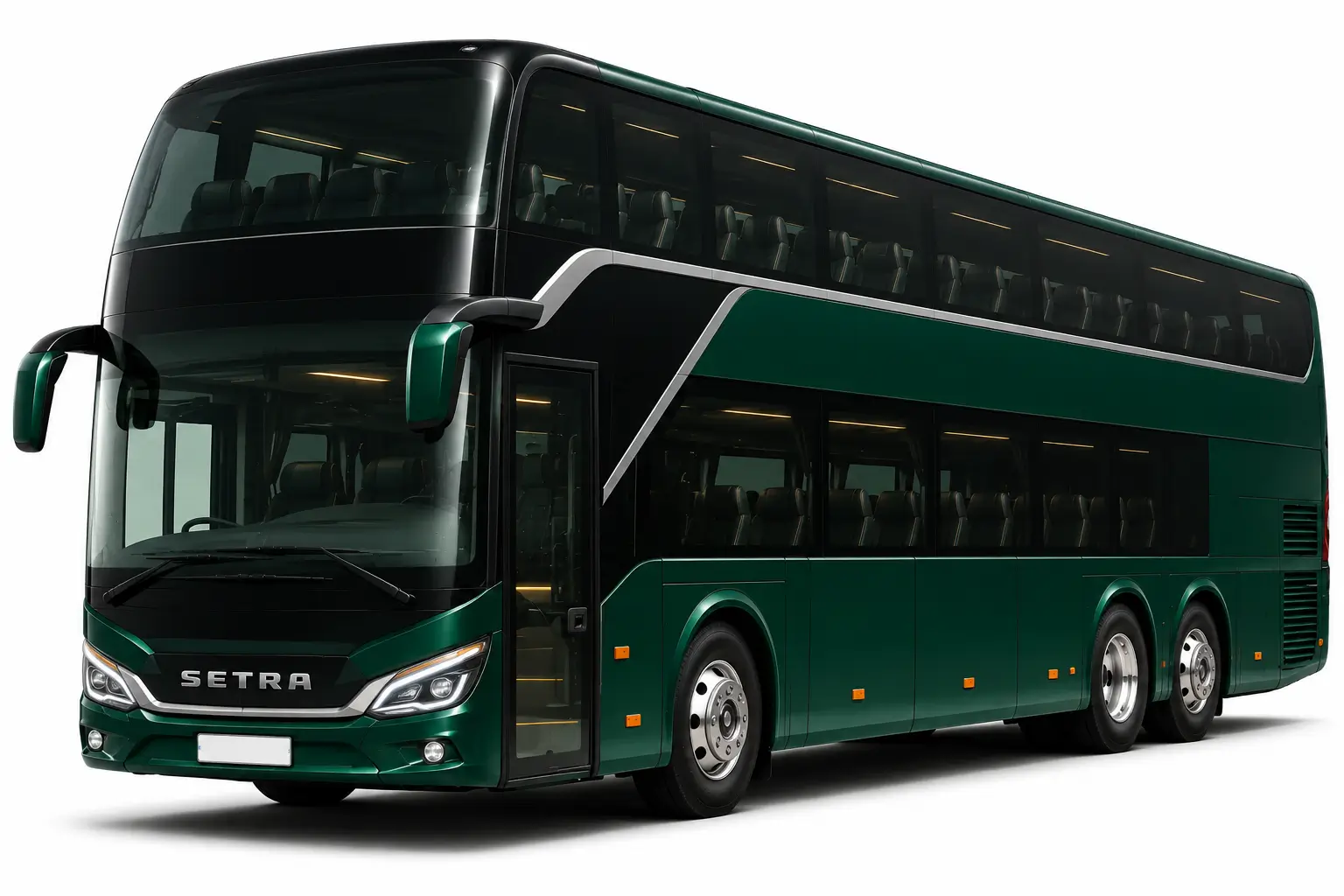
72-Seat Double-Decker for the Biggest Groups
Seventy-two seats over two decks, one driver and one departure time. When a group is too big for a single-deck coach, the double-decker keeps everyone together rather than splitting the day across two vehicles.
Loading the quote form…
Groups that fill a double-decker
Three examples where seventy-plus seats in one vehicle made the day simpler.
Whole-school trip
Sixty pupils and their teachers from a school in East Kilbride going to a theme park for the end of term.
We'd suggest: One 72-seater, with staff spread across both decks.
Supporters' branch
Sixty-five members travelling to a cup final at Hampden.
We'd suggest: The double-decker, with the drop-off agreed around the road closures.
Large wedding
Seventy guests moving from a city-centre ceremony to a country-house reception.
We'd suggest: A 72-seater for the main run, with a minibus for the late return.
Two decks, one group
A double-deck coach is the largest vehicle in our fleet. It carries seventy-two passengers across an upper and a lower deck, with a staircase between them, and it's built for long distances as well as short hops. For any group between about fifty-five and seventy-two, it's usually simpler than a 53-seater plus a minibus, because everyone leaves, travels and arrives together.
The biggest benefit is coordination. A school trip with sixty pupils on one vehicle has one register, one set of staff and one timetable. A supporters' club on one coach sings the same songs on the way home. A wedding party arrives at the reception in one go, rather than in waves.
Its size does bring a few practical points, which we cover below: where it can stop, which roads it can use, and how the stairs affect passengers who find steps difficult.
Height, length and planning the route
A double-decker is much taller than a single-deck coach, and some routes have low railway bridges, tunnels or overhanging trees it can't pass under. Our drivers plan the route with the vehicle's height in mind, so the journey may follow main roads even when a shorter road looks quicker on a map.
Length matters too. It needs a long, clear stretch to stop and space to turn, so pickups work best at school drives, large car parks, stadium coach parks and wide main roads. A tenement road lined with parked cars almost never works for a vehicle this long. When the group is spread across several homes, gather everyone at one stop on a main road instead.
At venues and events, a coach of this size usually uses the official coach area. Stewards and the police sometimes move that area for crowd safety, so the driver will phone your organiser on the day with where to find the coach.
Speed and journey time follow from the size as well. A double-decker is steady and comfortable on the M8, M74 and M77, but it takes a little longer than a car to clear junctions and roundabouts, and it can't use some of the short cuts a minibus would. We build that into the timings, so a pickup an hour before kick-off or a ceremony really means an hour.
Life on a double-deck coach
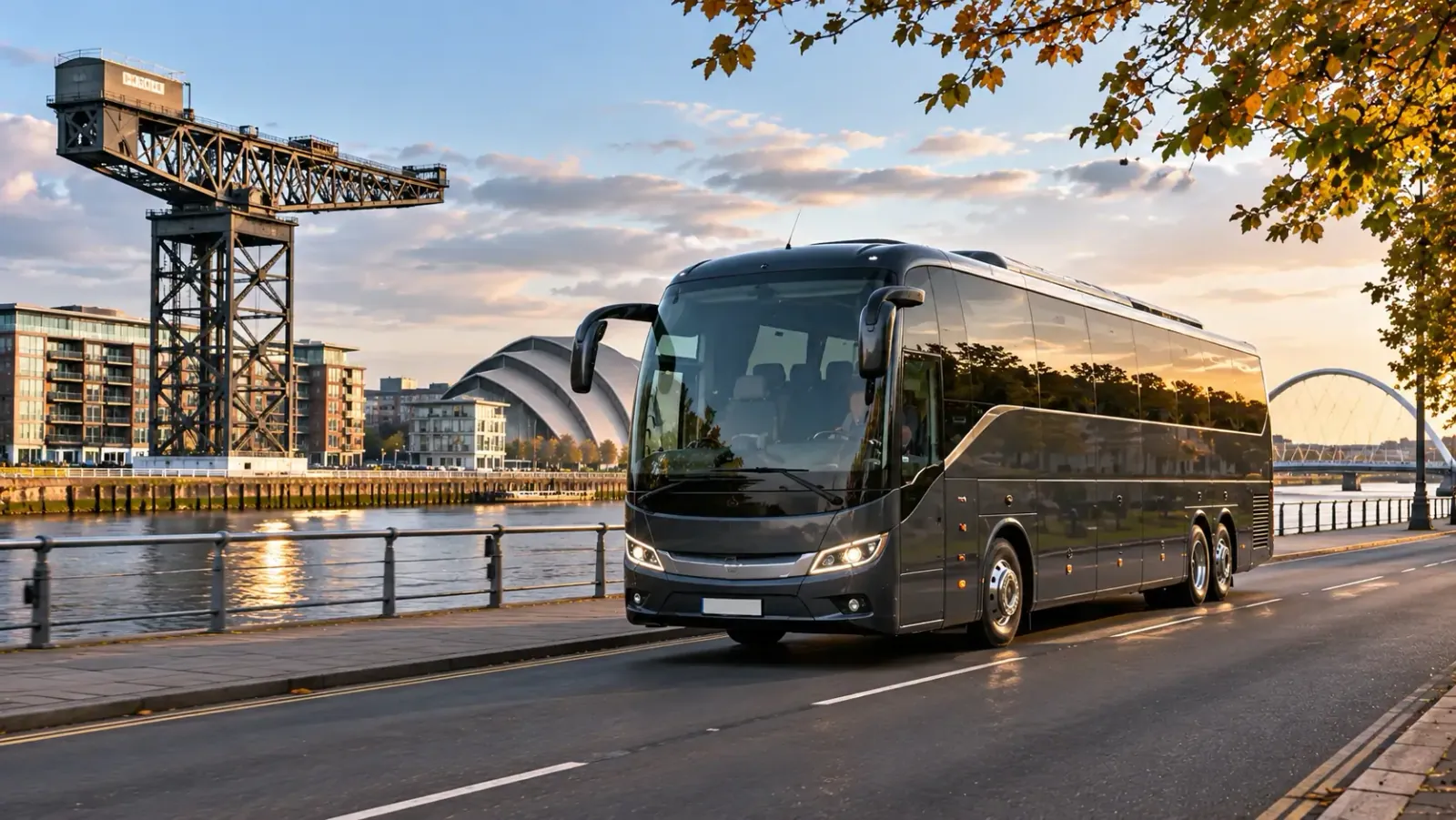
Boarding is through the door near the front, with the staircase up to the top deck close by. The lower deck is easiest for anyone who finds stairs difficult, and it's usually where teachers or group leaders sit so they can talk to the driver. The upper deck has the best views, which makes it popular on scenic routes.
Every seat has a belt. Features such as toilets, tables and charging points vary between coaches, so if any of them is essential for your journey, tell us when you book and we'll confirm what the coach on your date has.
On a moving coach, the stairs are the main hazard. Passengers should stay seated while the coach is moving and only use the stairs when it has stopped, which is worth reminding children about before setting off.
Luggage on a double-decker
Double-deck coaches have a luggage hold, but with seventy-two passengers it fills more quickly per head than on a single-deck coach. For day trips with small bags, there's no problem. For a big group going away overnight, tell us how many suitcases are coming.
If the luggage won't fit, there are two answers: a single-deck 53-seat coach plus a smaller vehicle for the overflow, or a separate van for the bags. We'll suggest whichever suits your group and destination best.
Schools, supporters, festivals and weddings
Schools book the double-decker for the biggest trips of the year: a whole year group to a theme park, a sports day at another school or an end-of-term outing. With staff on both decks and a clear plan for using the stairs, it's a safe and simple way to move a large number of pupils. The details a school should send us, such as staff ratios and the bell times, are set out under school trips.
Conference organisers use it to move delegates between city-centre hotels and the SEC at the start and end of each day. Seventy delegates on one departure means one timetable to publish and no queue at a taxi rank in the rain. For a programme with an evening dinner at another venue, the same coach can make the extra run. See corporate travel for invoicing and repeat bookings.
Supporters' clubs use it for cup finals and away fixtures, especially when a branch has more members than a 53-seater can take. On long trips, we build in the breaks drivers are required to take and agree the return time before the day.
Festival and concert crowds are another natural fit. For an event like TRNSMT or a big show at the OVO Hydro, a group from a town outside the city can travel in together and leave together, without relying on the last train.
Large weddings use it for the main guest run between the ceremony and the reception. Many couples add a smaller vehicle for an early return, so families with children and older guests can leave before the end. Our wedding transport page covers how those days are planned.
Access in the 72-seat double-deck coach
Anyone who finds steps hard should sit on the lower deck, close to the door. There are handrails at the entrance and on the stairs, and the driver can help with bags. Folded wheelchairs and walking frames go in the hold. A passenger who needs to stay in their wheelchair during the journey needs a coach fitted with a lift and a wheelchair space, which not every double-decker has, so tell us first and we'll check what's available for your date.
Moving seventy people without fuss
Large groups take time to board, so ask everyone to arrive fifteen to twenty minutes before departure. Split the group into smaller sections with a named leader each, especially on school trips, and have each leader count their own section on and off at every stop.
Keep one contact for the driver: the person who can confirm timings, report a late arrival and decide when the group is ready to leave. With seventy people, that single point of contact prevents mixed messages.
If your group is between fifty-three and seventy-two, the double-decker is usually the simplest choice. Above seventy-two, two coaches running together work well, and we can coordinate them so both arrive at the same time.
On long days, the driver's legal rest breaks shape the plan. A trip to a ground in England or a full day at a theme park can mean a second driver or an extra stop, and we work that out before confirming, not on the motorway.
To get a quote, tell us the date, where you're starting and heading, how many are travelling and how many cases they'll bring. Add any times that are fixed, like a kick-off or a ceremony, and we'll plan backwards from those.
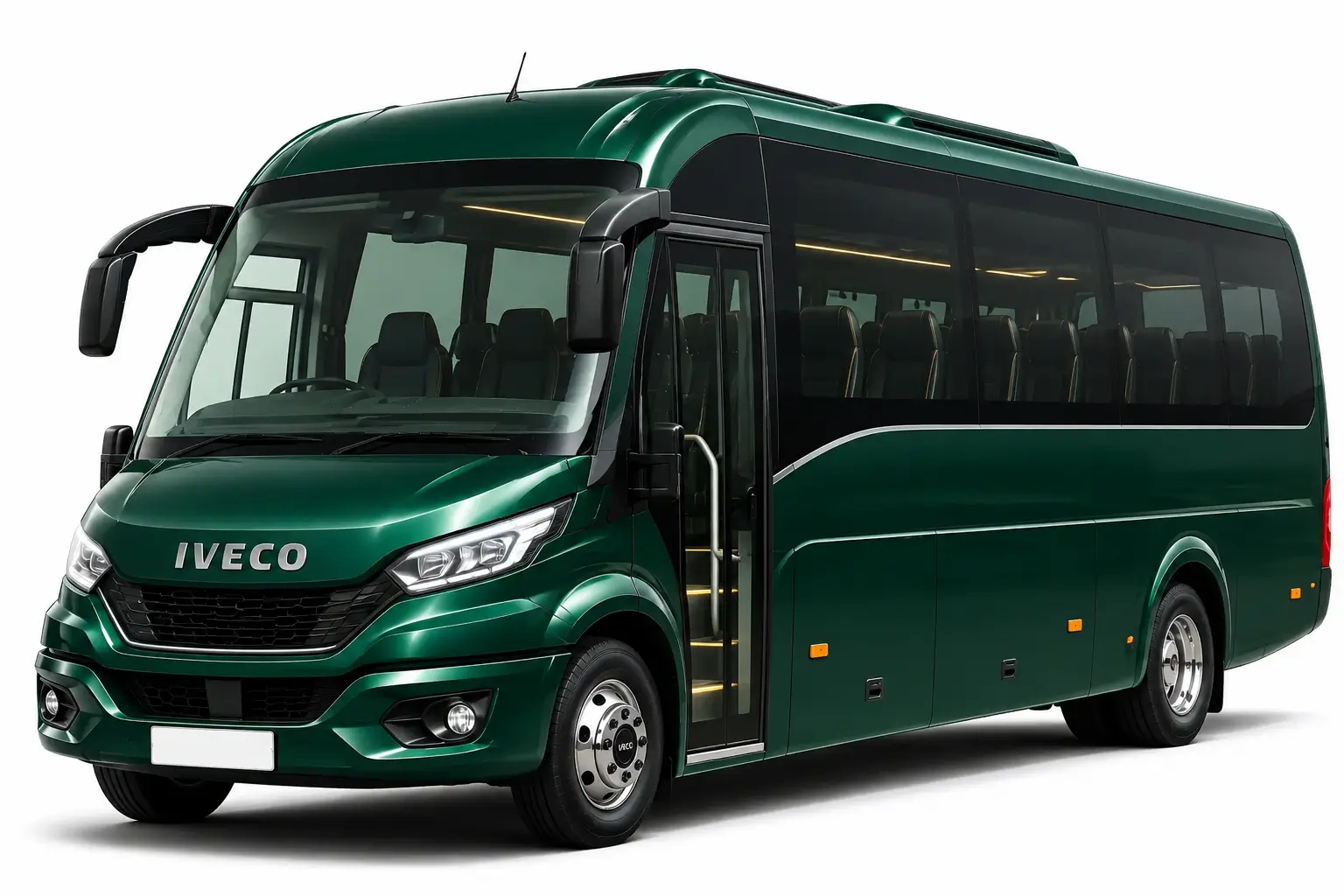 24-seat minibus
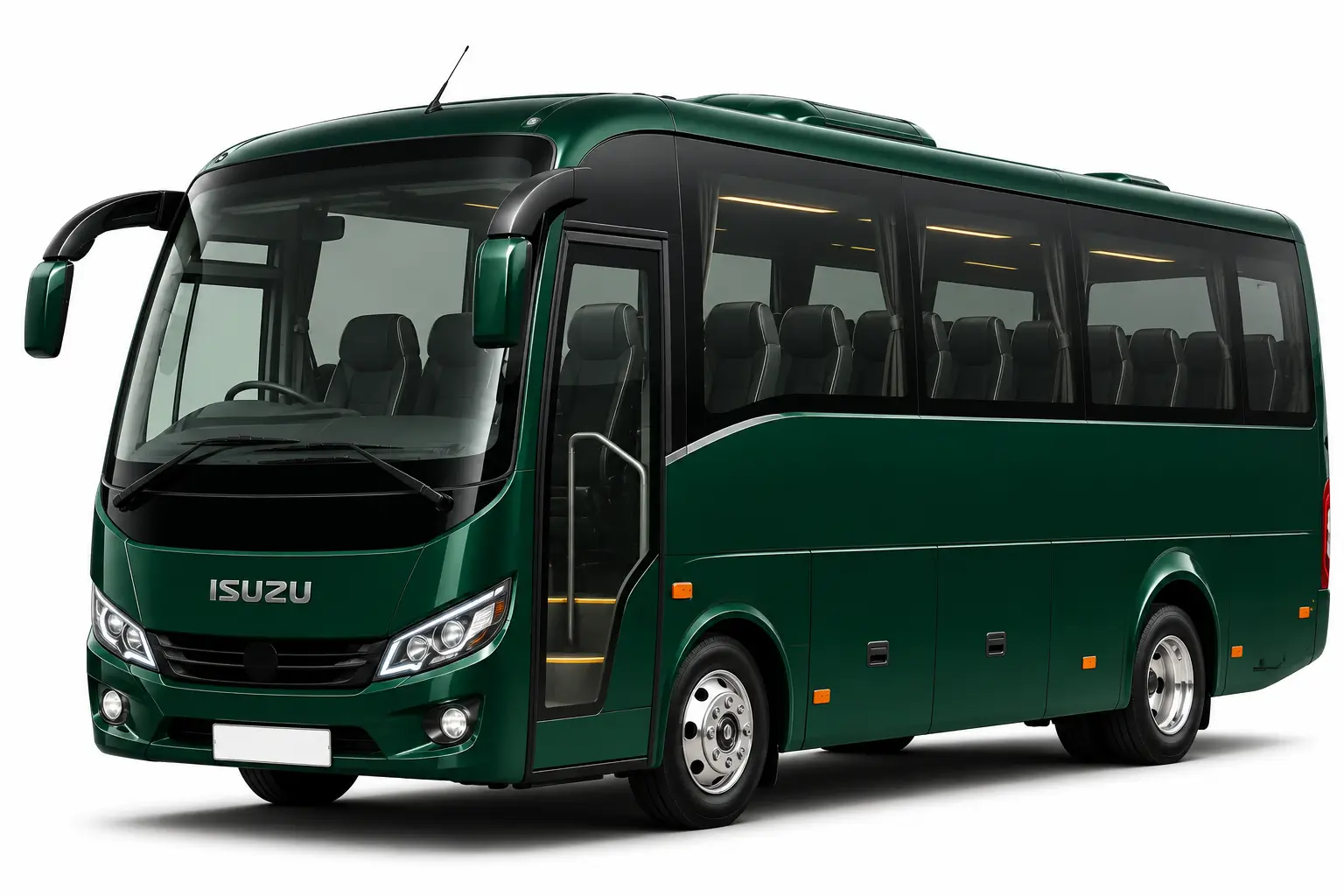 29-seat midi coach
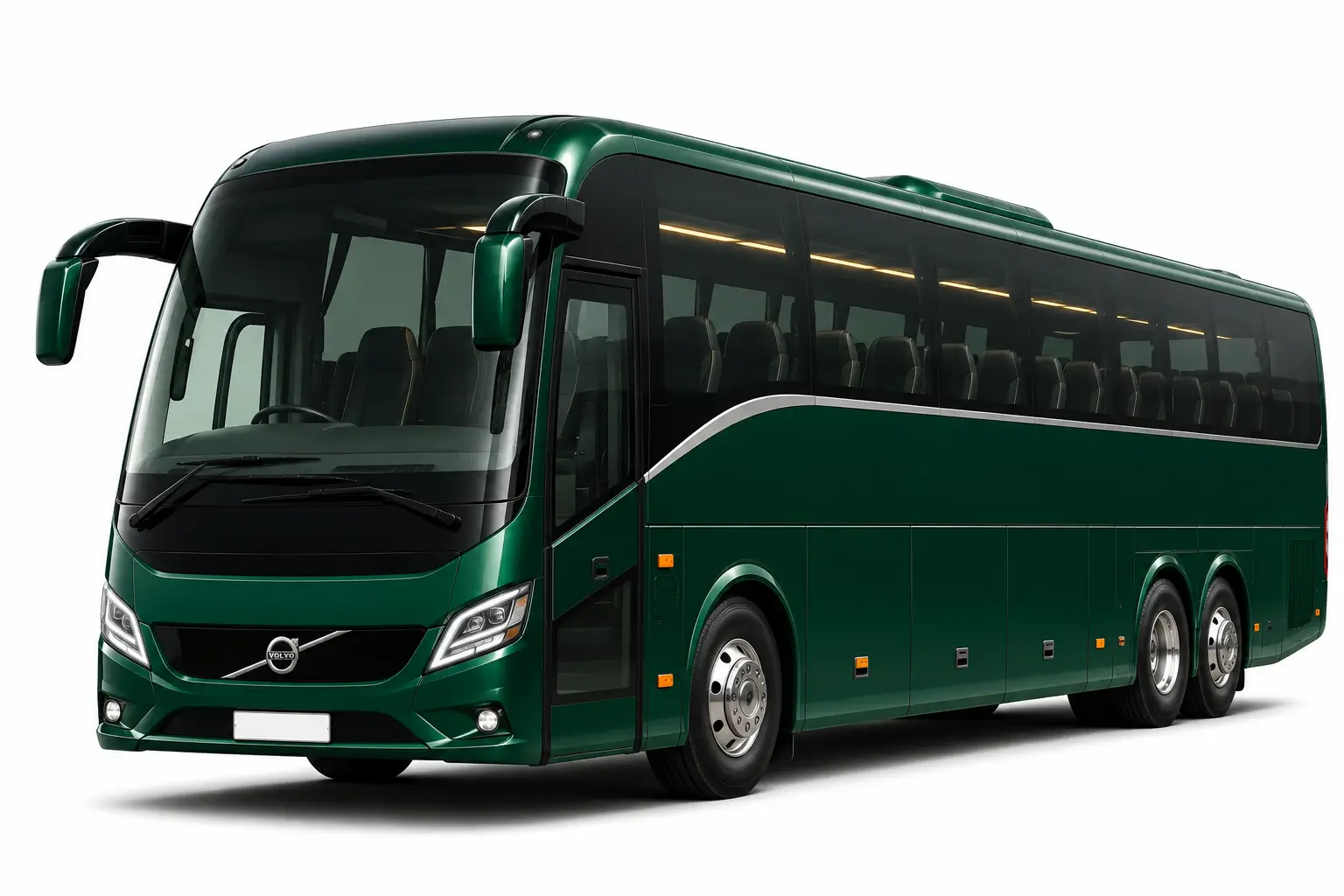 53-seat coach
Double-decker questions
- How many people fit on the double-deck coach?Seventy-two passengers, plus the driver, across the two decks.
- Can a double-decker go anywhere a normal coach can?Not always. It's taller, so the driver plans a route that avoids low bridges and tunnels.
- Can it collect from our street?Usually not from residential streets. A school drive, a large car park or a wide main road works best.
- Is the top deck safe for children?Yes, with belts on and the rule that nobody uses the stairs while the coach is moving.
- How much luggage can it carry?Day bags are no problem. For overnight trips, tell us the number of cases, as the hold fills faster than on a single-deck coach.
- Does it have a toilet?Some double-deck coaches do. If you need one, ask when you book and we'll confirm it.
- Can passengers with limited mobility travel?Yes, on the lower deck near the door. A wheelchair user who can't transfer to a seat needs a lift-equipped coach, which we'd have to check is free on your date.
- When should we book a double-decker instead of two coaches?When the whole group, up to seventy-two, needs to travel together on one timetable.