
Coach Hire with a Driver for Large Glasgow Groups
Midi, full-size and double-deck coaches for year groups, clubs, wedding parties and tours, with the boarding point, the breaks and the return worked out before the day.
Loading the quote form…
When should a Glasgow group book a coach instead of a minibus?
Usually once you pass about 24 passengers, or when a smaller group has suitcases that need a proper hold. We run a 29-seat midi coach, a 53-seat coach and a 72-seat double-deck coach, and every one comes with a driver.
When a group outgrows a minibus
There's a point where adding a second minibus stops making sense. Two vehicles mean two drivers, two sets of timings and two places to meet afterwards, and the organiser spends the day counting heads in two queues. A single coach puts everyone through one door and keeps the group together from the first stop to the last.
Coaches also change what a group can carry. A full-size coach has a luggage hold under the floor, so overnight bags, kit, golf clubs and instrument cases travel underneath rather than on the seats. That's why a choir of twenty heading away for the weekend often books a coach before a much bigger group on a short evening trip does.
The trade-off is size. A coach needs more room to turn, a proper place to stop and a little more planning around the streets at either end. Most of this page is about that planning, because it decides how smoothly the day runs.
If you're still weighing it up, our minibus hire with a driver page covers groups of up to twenty-four. The two pages are written to be read together.
One coach or two minibuses
For groups of about 25 to 45, both can work. The right choice depends on where people are starting from.
One coach
- Everyone boards and leaves together
- A hold for bags, kit and cases
- One driver and one meeting point
Worth knowing
- Needs a main road or a bay to stop on
- One pickup point suits it best
Two minibuses
- Can collect from two sides of the city
- Get closer to doors on narrow streets
- Easier to split for different return times
Worth knowing
- Two drivers to coordinate
- Less room for big luggage
Three coach sizes, three kinds of trip
The midi coach seats twenty-nine and is shorter than a full-size coach, so it manages streets that a bigger vehicle can't. It suits a single school class with staff and bags, a bowling club travelling to a tournament, or a family party heading to a country wedding venue.
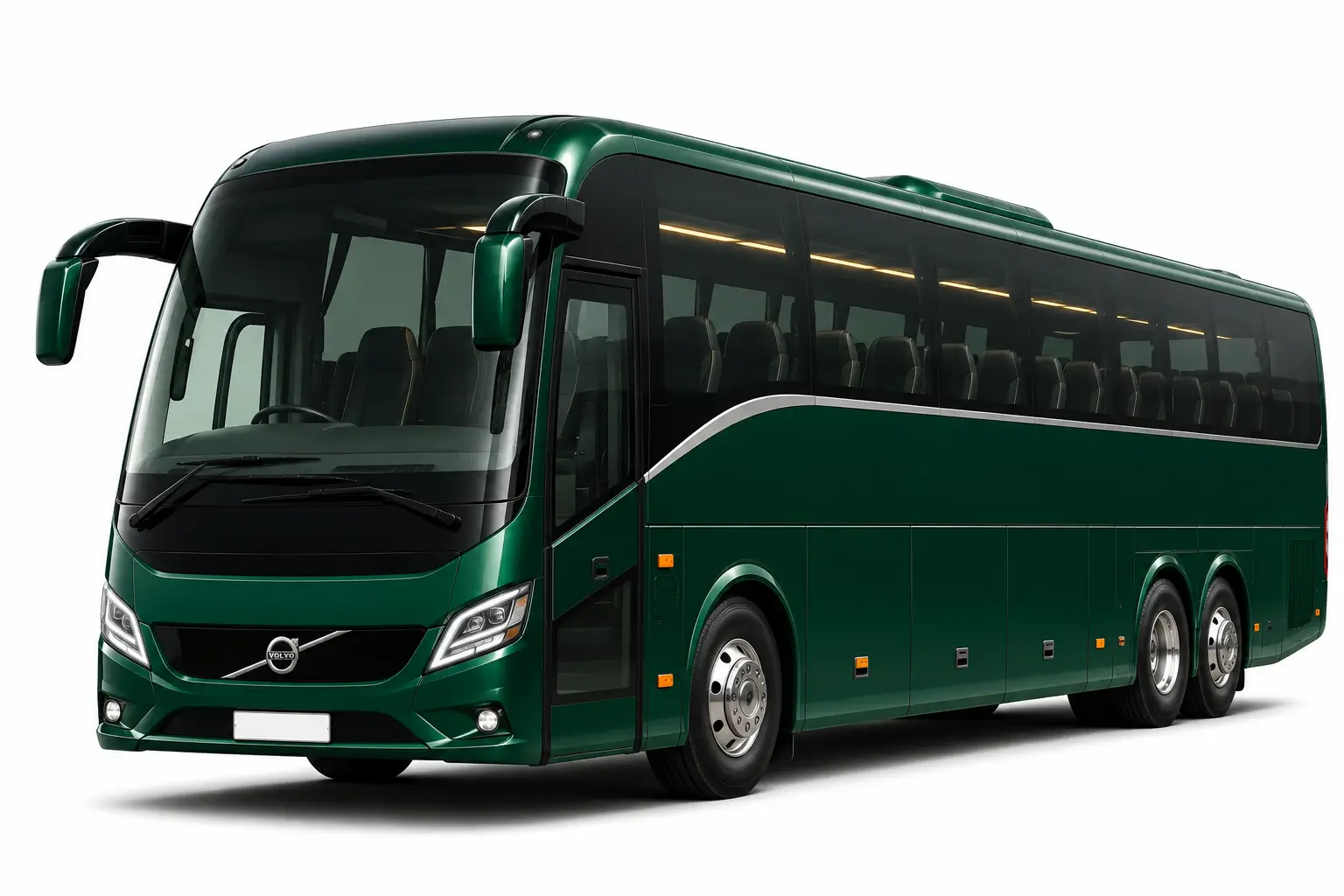
The 53-seat coach is the standard full-size vehicle. Two classes from the same school, a supporters' club on the way to Hampden, or the whole guest list moving from the ceremony to the reception all fit on one. It's also the size most groups choose for a long day out, because there's space to spread out.
The 72-seat double-deck coach takes the biggest groups on a single departure: conference delegates, a large youth organisation or a big works outing. It's around four metres tall, so the driver plans the route around low railway bridges and tight corners, and the pickup point needs a clear stretch of kerb.
Holds, steps and seating
A coach has a door at the front, sometimes a second one in the middle, and a few steps up from the kerb. Passengers with walking sticks usually manage with the handrail, but if anyone uses a wheelchair or can't manage steps, tell us before you book so we can check what's available for your date.
The hold runs under the floor between the wheels. On the 53-seater it takes roughly a medium case per passenger, and the driver loads it so the bags that come off first go in last. For a group with lots of kit, such as a pipe band or a rugby squad, send us a rough count and we'll confirm it fits.
Some coaches have a toilet on board and some don't. If that matters for a long run north or south, ask when you request the quote and we'll tell you which vehicle we can offer.
Where a coach can stop in Glasgow
Most of the city's tenement streets were laid out long before anyone imagined a twelve-metre vehicle. With cars parked on both sides, a coach can get in but often can't get out again without reversing. So for full-size coaches we collect from a main road, a school gate, a church car park or a hotel frontage, and we'll suggest the nearest option to your group's starting point.
Schools and leisure centres usually have a bus bay or a drive. Hotels on the main roads normally let a coach stop briefly at the front; it's worth asking reception if they have a preferred spot. In the city centre, the driver will pick a kerb that's legal and safe at that time of day, which isn't always the closest one.
When you send the request, give us the address and anything you know about the street: a narrow entrance, a barrier, speed bumps, a turning circle. Two lines of local knowledge save ten minutes of reversing on the day.
A coach day out, hour by hour
A works outing to Stirling and the Trossachs for 48 staff. Times are approximate and depend on traffic.
| Time | What happens | Why it matters |
|---|---|---|
| 8.15am | Coach arrives at the office car park | Fifteen minutes to load bags and count heads before leaving. |
| 8.30am | Depart for Stirling | About an hour up the M80 in normal traffic. |
| 9.45am | Drop-off near Stirling Castle | The driver sets down as close to the castle as coaches are allowed to go. |
| 1pm | On to the Trossachs for lunch | Driver takes the legal break while the group eats. |
| 5pm | Leave for Glasgow | Agreed before lunch so nobody wanders off. |
| 6.15pm | Back at the office | Later if the M80 is busy on a Friday. |
Long days and longer trips
The law caps the time a coach driver spends at the wheel and on duty in a single day, with set breaks along the way. A trip that leaves at seven in the morning and comes back after a late dinner can go past what one driver is allowed, so we plan a second driver or a changeover point. You'll see that in the quote from the start, not as an extra later.
Breaks also shape the timetable on a shorter day. On a run of two hours or more, the driver stops for a rest at a services or a lay-by with facilities, which is handy for passengers too. We put those stops into the plan so nobody is surprised when the coach pulls off the motorway near Stirling or Abington.
For trips that go well beyond the central belt, to Inverness, the Lake District or a fixture in England, see travel beyond Glasgow. It covers overnight stays, where the driver sleeps, and how the timetable works around legal breaks.
Many of our coach bookings come from particular kinds of trip, and each has its own page: school trips, wedding guest transport, sports clubs and supporters, and golf tours with clubs in the hold.
Running the day as the organiser
With forty or fifty people, boarding is where time disappears. A printed list of names, ticked off at the door, is quicker than counting heads twice. If you have helpers, give each one a section of the list and let them report to you rather than to the driver.
Agree the return time and place before anyone leaves the coach, and say it twice. The driver will usually park away from the drop-off point during the day, so the pickup spot needs to be somewhere everyone can find again: a car park entrance, a named hotel, a statue on a square. Share the driver's number with your helpers too.
Finally, keep a few seats free near the front for anyone who feels travel sick or needs to get off first. On a full double-deck coach, decide who sits upstairs before you board, because nobody should be moving about on the stairs while the coach is under way.
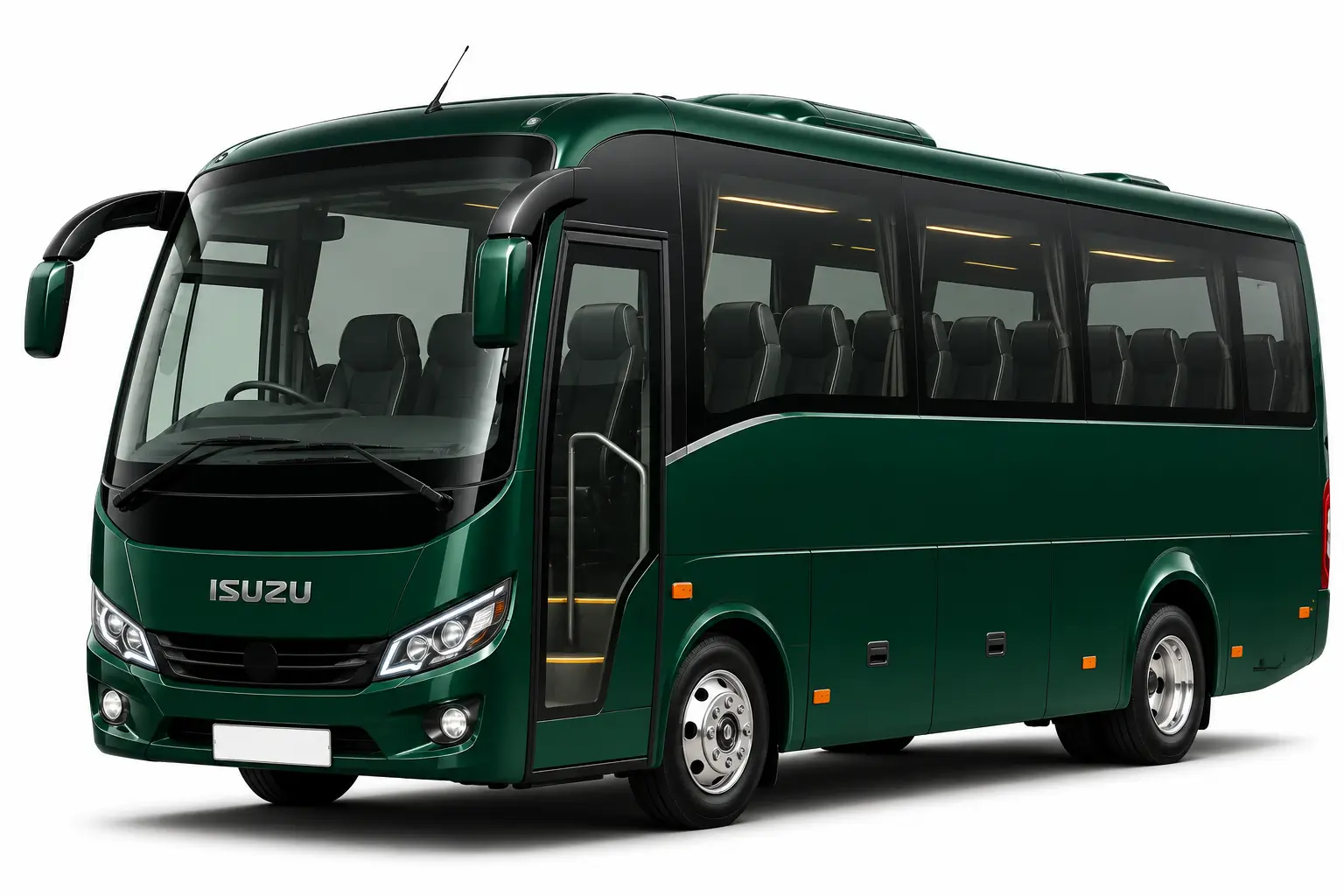 29-seat midi coach
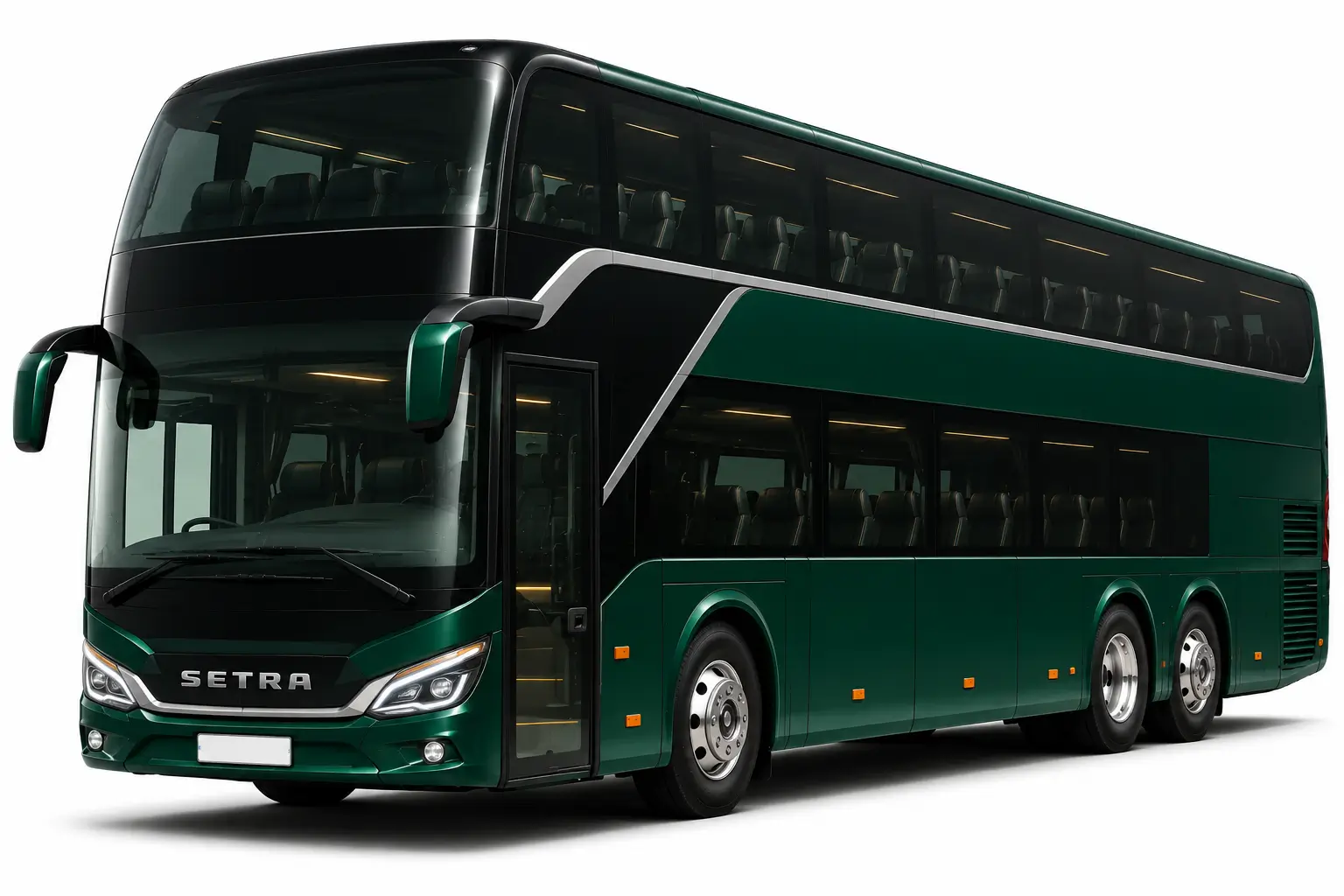 72-seat coach
What to send for a coach quote
The more of this we have, the fewer questions we need to ask before quoting.
- Date and the time you need to arrive
- The boarding address and anything awkward about it
- Passenger numbers, including staff or helpers
- Luggage, kit or equipment for the hold
- The return time, or whether it's one-way
- Any stops on the way, and mobility needs
Coach hire questions
How many people fit on your biggest coach?
Our largest is a 72-seat double-deck coach. For more than that, we can run two coaches together with the same timings.
Can a full-size coach collect from our street?
Sometimes, but many Glasgow tenement and cul-de-sac streets are too tight. We'll suggest the nearest main road, school or hotel frontage instead.
Is a midi coach easier to get into small streets?
Yes. The 29-seat midi coach is shorter than a full-size coach, which helps on narrower roads and in smaller car parks.
Do your coaches have toilets?
Some do and some don't. Ask when you request a quote and we'll tell you which vehicle is available for your date.
Will we need two drivers for a long day?
If the day is long enough to go past a single driver's legal limits, yes. We'll tell you when we quote, so there are no surprises later.
Can the coach stay with us during the day?
Yes. The driver parks nearby and the waiting time is included in the quote, along with any legal breaks.
How much luggage goes in the hold?
On a full 53-seater, roughly a medium case per passenger. Send a rough count of anything bulky, such as kit bags or instruments, and we'll check it fits.
Do you run coaches outside Scotland?
Yes. Trips to England are planned around drivers' hours and, where needed, an overnight stop. Our nationwide page has the details.